
The Philippine Deep: Exploring One of the Deepest Places on Earth

A Hidden World Beneath the Waves

Imagine a place so deep that Mount Everest could disappear beneath the ocean and still remain underwater. Hidden beneath the eastern waters of the Philippines lies the Philippine Deep —one of the deepest ocean trenches on Earth and one of the country's most extraordinary yet least-known natural wonders.
Far below the sunlit surface of the Philippine Sea is a world of complete darkness, immense pressure, and mysterious marine life. While millions of visitors come to the Philippines to explore its tropical islands, coral reefs, and beaches, few realize that one of the planet's most extreme environments lies just beyond its eastern coastline. This hidden frontier continues to challenge scientists, inspire explorers, and reveal new discoveries about our oceans.
In this guide, you'll discover how the Philippine Deep was formed, why it ranks among the deepest places on Earth, and the remarkable creatures that survive in its extreme conditions. We'll also explore its geological importance, the technologies used to study it, ongoing conservation efforts, and fascinating facts that highlight why the Philippine Deep is one of the greatest natural wonders of the Philippines—and one of the last truly unexplored places on our planet.
Table of Contents - The Philippine Deep
Where Is the Philippine Deep?
The Philippine Deep, also known as the Philippine Trench, lies in the eastern Philippine Sea, just beyond the eastern coastline of the Philippine archipelago. Stretching parallel to the islands of Samar, Leyte, Surigao, and Mindanao, this immense underwater trench marks one of the most dramatic geological features in the western Pacific Ocean.
Quick Facts About the Philippine Deep
Location: Eastern Philippine Sea, off the coasts of Samar, Leyte, Surigao, and Mindanao.
Length: Approximately 1,320 kilometers (820 miles), making it one of the longest ocean trenches in the region.
Maximum Depth: Estimated at more than 10,000 meters (32,800 feet) below sea level, placing it among the deepest ocean trenches on Earth.
Deepest Point: The trench reaches its greatest known depth at the Galathea Depth, named after the Danish research expedition, that conducted some of the earliest scientific investigations of the area.
Although hidden beneath the ocean's surface, the Philippine Deep plays a vital role in shaping the country's geology and marine environment. Formed along the boundary of powerful tectonic plates, it is part of the dynamic Pacific Ring of Fire and continues to influence earthquakes, volcanic activity, and deep-sea ecosystems throughout the Philippines. Its remote location and extreme depth also make it one of the least explored natural wonders on the planet.

How the Philippine Deep Was Formed
The Philippine Trench formation is the result of powerful geological forces that have been shaping the Earth's crust for millions of years. Hidden beneath the Philippine Sea, the trench was created through the slow movement of tectonic plates—a process that continues today. This ongoing activity not only formed one of the deepest ocean trenches on Earth but also contributes to the Philippines' many volcanoes, frequent earthquakes, and dramatic landscapes.
How the Philippine Deep Was Created
The Philippine Sea Plate
East of the Philippines lies the Philippine Sea Plate, a massive tectonic plate that is constantly moving westward. Although the movement is only a few centimeters each year, over millions of years it has dramatically reshaped the seafloor.
The Philippine Mobile Belt
Along the eastern edge of the archipelago lies the Philippine Mobile Belt, a complex zone where several tectonic plates interact. The collision between these massive plates has created mountain ranges, volcanic islands, and deep ocean trenches.
Subduction – The Driving Force
The Philippine Deep formed through a process called subduction, where the Philippine Sea Plate slowly sinks beneath the Philippine Mobile Belt. As one plate descends into the Earth's mantle, it creates a long, narrow trench that grows deeper over geological time.
Millions of Years of Change
This process has been occurring for millions of years, gradually carving the Philippine Deep into one of the world's deepest underwater features. Even today, the trench continues to evolve as tectonic movement reshapes the region.
Ongoing Geological Activity
Because the Philippine Deep lies within the Pacific Ring of Fire, it remains part of one of the most geologically active regions on Earth. The same tectonic forces responsible for the trench also contribute to the Philippines' active volcanoes, frequent earthquakes, and occasional tsunamis.
The Philippine Deep is more than an underwater canyon—it is a living record of Earth's dynamic geology. Its formation demonstrates how immense tectonic forces continue to shape the Philippine archipelago, making the country one of the most fascinating geological landscapes on the planet.
How Deep Is the Philippine Deep?
The deepest part of the Philippines lies within the Philippine Deep, where the ocean floor plunges to more than 10,000 meters (32,800 feet) below sea level. This immense depth places it among the deepest ocean trenches on Earth and highlights just how little we know about the hidden world beneath the Philippine Sea.
Just How Deep Is It?
Deeper Than Mount Everest Is Tall
Mount Everest stands 8,849 meters (29,032 feet) above sea level. If it were placed inside the Philippine Deep, its summit would still remain more than 1 kilometer (0.6 mile) below the ocean's surface.
Far Deeper Than the Grand Canyon
The Grand Canyon reaches a maximum depth of about 1,857 meters (6,093 feet). The Philippine Deep is more than five times deeper, illustrating the enormous scale of this underwater trench.
Second Only to the Deepest Ocean Trenches
Although not as deep as the Mariana Trench—the deepest known trench on Earth—the Philippine Deep ranks among the world's deepest oceanic features.
A World of Crushing Pressure and Eternal Darkness
At these depths, sunlight never penetrates the water. Temperatures hover just above freezing, typically between 1°C and 4°C (34°F–39°F), while pressure exceeds 1,000 times the atmospheric pressure at sea level—conditions that would instantly crush an ordinary submarine.
Did You Know?
The deepest point of the Philippine Deep is known as the Galathea Depth.
Scientists have explored only a small portion of the trench, meaning many of its habitats and species remain undiscovered.
Despite the extreme conditions, specialized marine life has evolved to survive in complete darkness under immense pressure, making the Philippine Deep one of Earth's last great frontiers of exploration.

Life in the Philippine Deep
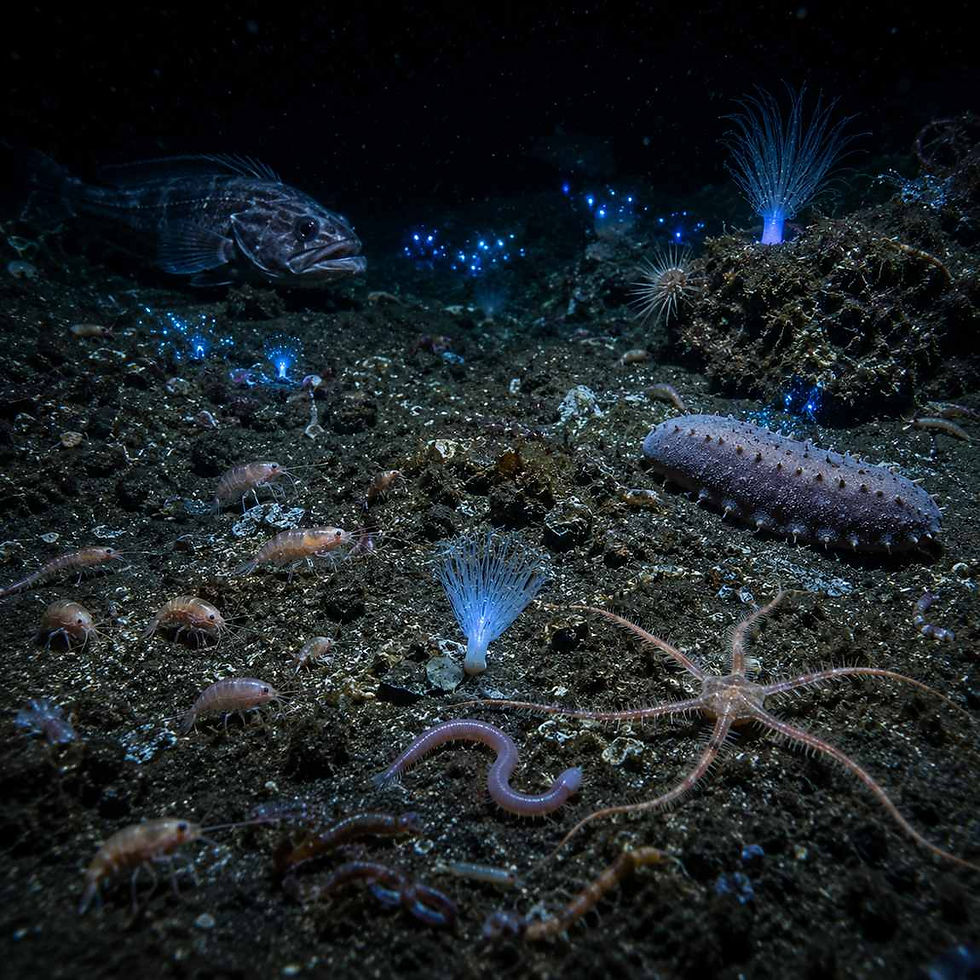
At first glance, the Philippine Deep may seem like a lifeless abyss. More than 10 kilometers beneath the ocean's surface, there is no sunlight, temperatures hover just above freezing, and water pressure is so immense that it would crush most living organisms. Yet this hidden world supports an extraordinary variety of life specially adapted to one of the harshest environments on Earth. Studying Philippine Deep marine life continues to reveal just how resilient and diverse life can be.
Remarkable Creatures of the Deep
Amphipods – The Deep-Sea Scavengers
These shrimp-like crustaceans are among the most common inhabitants of deep ocean trenches. They feed on organic matter that slowly drifts down from the surface, helping recycle nutrients within the deep-sea ecosystem.
Sea Cucumbers – Nature's Recyclers
Deep-sea sea cucumbers move slowly across the ocean floor, consuming sediment and breaking down organic material. Their feeding activity helps keep the seabed healthy and supports nutrient cycling.
Brittle Stars – Masters of the Seafloor
Closely related to starfish, brittle stars use their flexible arms to crawl across the seabed in search of food. Many thrive in complete darkness, feeding on tiny organisms and organic debris.
Deep-Sea Fish – Built for Darkness
Some deep-sea fish possess enormous mouths, expandable stomachs, and highly sensitive sensory organs that help them detect prey in the absence of light. Many have reduced eyesight because vision is of little use in perpetual darkness.
Polychaete Worms – Hidden Survivors
These segmented marine worms live within the sediments of the trench, feeding on organic matter while providing food for other deep-sea animals.
Microorganisms – The Foundation of the Ecosystem
Tiny bacteria and other microorganisms form the base of the deep-sea food web. Some obtain energy from chemicals released by the Earth's crust rather than sunlight, allowing life to flourish even in the deepest parts of the ocean.
How Life Survives in the Deep
Life in the Philippine Deep has evolved remarkable adaptations to survive under extreme conditions:
Extreme Pressure – Flexible cell structures and specialized biological processes allow organisms to function under pressures exceeding 1,000 times that at sea level.
No Sunlight – With complete darkness below about 1,000 meters, animals rely on heightened senses, chemical signals, or sensitive light-detecting organs instead of normal vision.
Bioluminescence – Many deep-sea organisms produce their own light through chemical reactions. This natural glow is used to attract prey, communicate, camouflage, or avoid predators in the pitch-black environment.
Although scientists have explored only a small fraction of the Philippine Deep, each expedition reveals new species and expands our understanding of life in extreme environments. This hidden ecosystem reminds us that some of Earth's greatest biological discoveries may still lie in the unexplored depths beneath the Philippine Sea.
Scientific Exploration of the Philippine Deep
Despite being one of the deepest places on Earth, the Philippine Deep remains one of the least explored regions of the world's oceans. Its extreme depth, crushing pressure, and complete darkness make exploration both technically challenging and expensive. Yet advances in Philippine Deep exploration continue to reveal new insights into marine biodiversity, geology, and the hidden processes shaping our planet.
How Scientists Explore the Philippine Deep
Research Vessels
Specialized oceanographic research ships serve as floating laboratories, carrying scientists and sophisticated equipment to survey the trench, map the seafloor, and collect biological and geological samples.
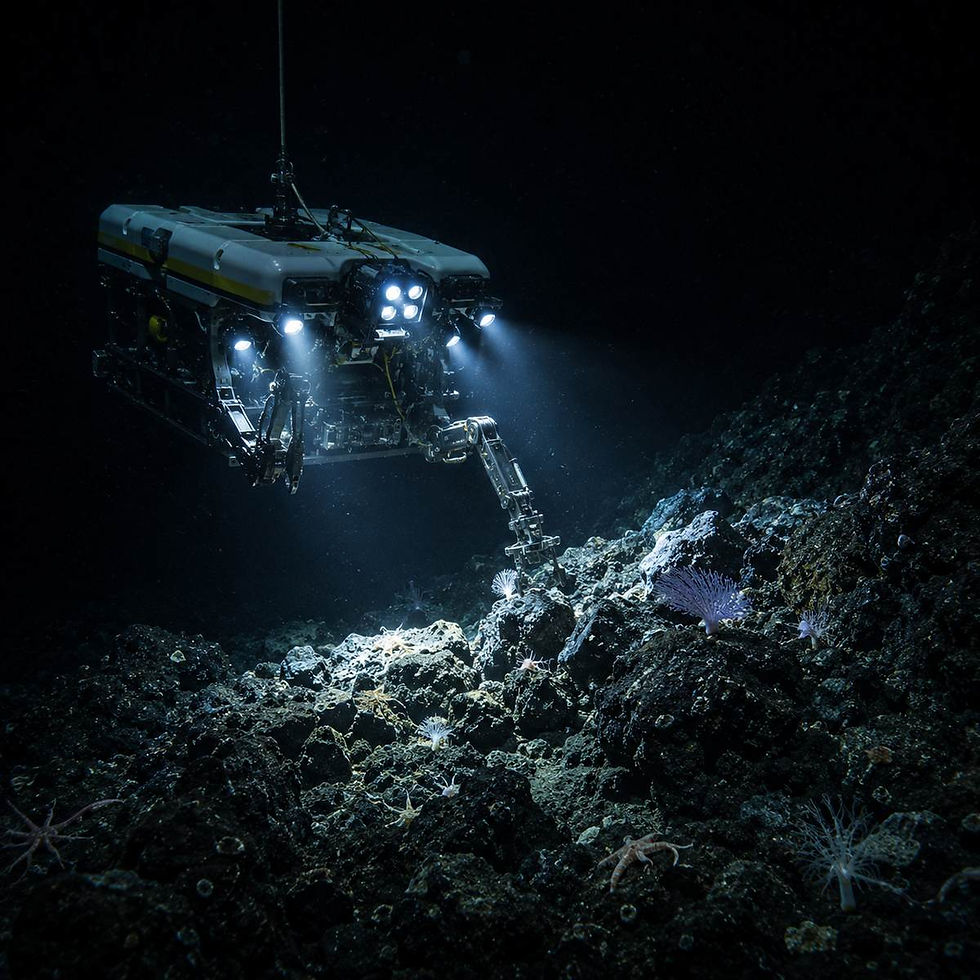
Remotely Operated Vehicles (ROVs)
Because humans cannot safely reach these extreme depths in conventional diving equipment, researchers deploy ROVs equipped with high-definition cameras, robotic arms, and scientific instruments. These remotely controlled vehicles capture images, collect samples, and study deep-sea life without disturbing the fragile environment.
Deep-Sea Submersibles
Although rare due to their cost and technical complexity, deep-diving submersibles allow scientists to observe the trench firsthand. Built with reinforced pressure-resistant hulls, these remarkable vehicles can withstand the immense forces found thousands of meters below the surface.
Advanced Deep-Sea Technology
Modern sonar systems, autonomous underwater vehicles (AUVs), underwater sensors, and environmental DNA (eDNA) analysis are helping scientists map unexplored areas and identify species that may never have been directly observed.
Discoveries and the Future of Exploration
Each expedition to the Philippine Deep expands our understanding of one of Earth's final frontiers. Researchers continue to discover previously unknown deep-sea organisms, study how life survives under extreme pressure, and investigate the geological forces responsible for earthquakes and volcanic activity throughout the region.
Because only a small portion of the Philippine Deep has been explored, scientists believe many new species and groundbreaking discoveries are still waiting to be found. As deep-sea technology continues to advance, future expeditions will undoubtedly reveal even more about this mysterious underwater world hidden beneath the Philippine Sea.
Why the Philippine Deep Matters
The Philippine Deep is much more than one of the deepest places on Earth. It is a natural laboratory where scientists study the forces that shape our planet and the remarkable life that thrives under extreme conditions. Understanding the importance of the Philippine Deep helps us appreciate why this hidden ecosystem deserves continued research and protection.
Why the Philippine Deep Is Important
A Hotspot for Biodiversity
Although only a small portion of the trench has been explored, scientists continue to discover unique deep-sea organisms specially adapted to life in complete darkness and immense pressure. Many species may exist nowhere else on Earth.
Climate Research
Deep oceans play a vital role in regulating the Earth's climate by storing heat and carbon. Studying the Philippine Deep helps researchers better understand long-term ocean circulation and its influence on global climate systems.
Understanding Plate Tectonics
The trench provides valuable insight into the movement of tectonic plates and the geological processes that formed the Philippine archipelago over millions of years.
Tsunami Research
Because the Philippine Deep lies within the Pacific Ring of Fire, monitoring tectonic activity helps scientists better understand the conditions that can generate tsunamis and improve hazard assessments.
Earthquake Science
Ongoing research within the trench contributes to a greater understanding of earthquakes, fault systems, and seismic activity that affect the Philippines and neighboring regions.
Studying Evolution in Extreme Environments
The organisms living in the trench have evolved extraordinary adaptations to survive crushing pressure, freezing temperatures, and total darkness. These species provide valuable clues about evolution, resilience, and the limits of life on Earth.
Ocean Conservation
As interest in deep-sea resources grows, understanding these fragile ecosystems becomes increasingly important. Scientific research supports informed conservation efforts that help protect one of the planet's least explored environments for future generations.
The Philippine Deep reminds us that some of Earth's greatest discoveries remain hidden beneath the sea. Protecting this remarkable underwater frontier ensures that its scientific, ecological, and natural value can continue to benefit humanity for generations to come.
Can You Visit the Philippine Deep?
The short answer is no. Due to its extreme depth, crushing pressure, and remote offshore location, the Philippine Deep is not accessible to tourists. Exploring the trench requires specialized research vessels, remotely operated vehicles (ROVs), and deep-sea submersibles capable of operating more than 10 kilometers beneath the ocean's surface.
How You Can Experience the Philippine Deep
Visit Ocean Museums and Marine Education Centers
Museums and aquariums throughout the Philippines offer exhibits that explain deep-sea ecosystems, marine biodiversity, and the geological forces that formed the Philippine Deep.
Follow Scientific Research
Research institutions and ocean exploration organizations regularly publish discoveries about new species, deep-sea technology, and ongoing expeditions, offering fascinating insights into this hidden world.
Watch Deep-Sea Documentaries
Award-winning nature documentaries and educational programs provide stunning footage of ocean trenches and the remarkable creatures that inhabit the deep sea.
Explore Nearby Marine Destinations
While you can't descend into the Philippine Deep itself; you can experience the Philippines' incredible marine biodiversity by snorkeling or diving at destinations such as Apo Island, Apo Reef Natural Park, Tubbataha Reefs Natural Park, and Balicasag Island.
Travel Responsibly
Learning about the Philippine Deep also highlights the importance of responsible ocean tourism. By supporting marine protected areas, choosing eco-friendly tour operators, and respecting marine life, visitors help protect the healthy oceans that connect the Philippines' vibrant coral reefs with the mysterious depths of the Philippine Sea.

Conservation of the Deep Ocean
Although hidden far beneath the ocean's surface, the Philippine Deep is not isolated from human activity. Protecting this extraordinary ecosystem has become an increasingly important part of deep ocean conservation in the Philippines, as scientists continue to learn more about the fragile habitats that exist in one of Earth's last great frontiers.
Protecting the Philippine Deep
Plastic Pollution
Even the deepest parts of the ocean are not immune to pollution. Plastic debris and microplastics have been discovered in deep-sea environments around the world, highlighting the far-reaching impact of waste generated on land.
Deep-Sea Mining Concerns
Growing interest in mineral resources found on the ocean floor has raised concerns about the potential impacts of deep-sea mining. Scientists emphasize the need for careful research before any activities that could disturb fragile and poorly understood ecosystems.
Climate Change
Rising ocean temperatures, changing ocean chemistry, and increasing carbon dioxide levels affect marine ecosystems at every depth. Understanding these changes is essential for protecting the long-term health of deep-ocean environments.
Scientific Protection
Continued research and deep-sea exploration provide the knowledge needed to guide conservation policies, identify sensitive habitats, and better understand the biodiversity of the Philippine Deep.
Global Cooperation
Because oceans are interconnected, protecting deep-sea ecosystems requires collaboration among governments, scientists, conservation organizations, and international partners. Sharing research, technology, and conservation strategies helps safeguard these unique environments for future generations.
The Philippine Deep reminds us that even the most remote parts of our planet deserve protection. By supporting science, responsible ocean stewardship, and international cooperation, we can help preserve one of the world's least explored and most remarkable marine ecosystems.
Takeaway– Earth's Hidden Frontier Beneath the Philippines
The Philippine Deep is one of the country's most extraordinary natural wonders—a hidden world that continues to inspire scientists, explorers, and ocean enthusiasts alike. Beneath the waters of the Philippine Sea lies an environment shaped by powerful geological forces, home to remarkable marine life specially adapted to survive in one of the most extreme places on Earth. Although few people will ever witness its depths firsthand, its scientific importance and ecological value extend far beyond the ocean floor.
From advancing our understanding of plate tectonics and earthquakes to revealing new species and deep-sea ecosystems, the Philippine Deep reminds us that much of our planet remains unexplored. Every scientific expedition uncovers new discoveries, reinforcing the importance of protecting these fragile and mysterious environments for future generations.
"Far beneath the waves lies a world few people will ever see—a reminder that some of Earth's greatest wonders remain hidden in the depths of the Philippine Sea."
Whether you're fascinated by marine science, natural history, or the incredible diversity of the Philippines, the Philippine Deep offers a powerful reminder that exploration is far from over.
Explore more Natural Wonders, Marine Life, and Ocean Discoveries on KGM Resorts, and uncover the extraordinary landscapes—both above and below the sea—that make the Philippines one of the world's most remarkable destinations.
Frequently Asked Questions
What is the Philippine Deep?
The Philippine Deep, also known as the Philippine Trench, is one of the deepest ocean trenches in the world. Located in the eastern Philippine Sea, it was formed by the movement of tectonic plates and is an important part of the Pacific Ring of Fire.
How deep is the Philippine Deep?
The Philippine Deep reaches a maximum depth of more than 10,000 meters (32,800 feet) below sea level. Its deepest known point is called the Galathea Depth, making it the deepest location within Philippine waters.
Is it deeper than Mount Everest?
Yes. Mount Everest stands 8,849 meters (29,032 feet) tall. If it were placed inside the Philippine Deep, its summit would still remain more than 1 kilometer (0.6 mile) below the ocean's surface, demonstrating the immense depth of the trench.
Can people visit the Philippine Deep?
No. The Philippine Deep is far too deep for tourism and can only be explored using specialized research vessels, remotely operated vehicles (ROVs), and deep-sea submersibles designed to withstand extreme pressure. However, visitors can learn about the trench through museums, aquariums, documentaries, and marine education centers.
What animals live in the Philippine Deep?
Despite its extreme conditions, the trench supports a surprising variety of life, including amphipods, sea cucumbers, brittle stars, polychaete worms, deep-sea fish, and microscopic organisms. Many species have evolved unique adaptations that allow them to survive in complete darkness under crushing pressure.
Is it the same as the Mariana Trench?
No. Although both are among the world's deepest ocean trenches, they are different geological features. The Mariana Trench is the deepest known trench on Earth, while the Philippine Deep is the deepest ocean trench within Philippine waters and one of the deepest anywhere in the world. Both are located in the western Pacific Ocean but formed in different tectonic settings and support distinct deep-sea ecosystems.

Wild Philippines: An Adult Coloring Book
Discover the rare and extraordinary endemic animals of the Philippines through this beautifully detailed adult coloring book inspired by the country’s unique biodiversity. From the majestic Philippine Eagle and the tiny Philippine Tarsier to rare forest mammals, vibrant birds, and fascinating marine species found nowhere else on Earth, every page celebrates the remarkable wildlife of the Philippine archipelago. Featuring intricate tribal-inspired patterns, tropical elements, and nature-themed designs, this coloring book invites you to explore, unwind, and connect with the wild beauty of the Philippines.



Philippines deep or sea is the best Ocean in the world that creates shallow water to fully appreciate it.