
Philippines Overview: Geography, People, Economy, and Cultural Heritage

Filipino Country: History, Culture, and Key Facts
The Philippines, a vibrant island nation in Southeastern Asia, is part of the extensive Philippine archipelago of over 7,000 islands rich in history, culture, and natural beauty. Known for its warm people, colorful festivals, and diverse landscapes, the country stands as a crossroads of Asian and Western influences.
The Philippines consists of more than 7,000 islands, each contributing to its remarkable diversity and unique geographical features.
Key Takeaways
A Nation of Islands: The Philippines is composed of more than 7,000 islands grouped into three main regions — Luzon, Visayas, and Mindanao — each offering distinct traditions, dialects, and cultural identities.
A Colonial Legacy: Spanish and American occupations profoundly shaped the nation’s religion, governance, and education, leaving a blend of Asian roots and Western heritage.
National Language: The adoption of Filipino as the national language played a crucial role in unifying the country and fostering a sense of national identity.
Philippines Population: The Philippines population is notable for its size and diversity, reflecting a rich mix of cultures and contributing to the country's dynamic social and economic landscape.
Modern Challenges: The country continues to address issues such as political corruption, social inequality, and environmental degradation, emphasizing the need for sustainable development and good governance.

Overview of the Philippines
Officially known as the Republic of the Philippines, the nation lies about 500 miles off the coast of Vietnam, bordered by the Philippine Sea to the east and the South China Sea to the west. The eastern coast of the Philippines is notable for its rugged mountain ranges and exposure to the Pacific Ocean, shaping much of the country's climate and natural boundaries.
Key geographical highlights include:
A total span of about 1,150 miles from north to south.
An irregular coastline of roughly 22,550 miles, among the longest in the world.
Over 7,000 islands, including notable eastern islands, about 350 of which are larger than one square mile.
The country’s geography creates a stunning contrast of mountains, beaches, volcanoes, and fertile plains, making it both breathtaking and challenging to govern and connect.
The Three Main Regions
Luzon – The Nation’s Heart
Home to Manila, the capital, and Metro Manila, the country’s economic core, Luzon is the largest and most populous island. It features vast agricultural lands and towering peaks like Mayon Volcano in the Bicol Peninsula—famed for its perfect cone shape and volcanic activity.
Visayas – The Islands of Celebration
The central region, known for its white-sand beaches and lively festivals, includes top travel destinations like Cebu, Bohol, and Iloilo. Its people are known for their hospitality and musical traditions that reflect the joyful spirit of the islands.
Mindanao – The Land of Promise
The country’s second-largest island is blessed with abundant natural resources and rich cultural diversity. Provinces such as Davao del Sur, Davao del Norte, Zamboanga del Norte, Zamboanga del Sur, Surigao del Sur, Surigao del Norte, Agusan del Norte, and Lanao del Norte are hubs of trade, agriculture, and eco-tourism. Davao City, near Mount Apo, the country’s highest peak, serves as a model for balanced urban growth and environmental preservation.
The three stars on the Philippine flag symbolize these regions, representing unity amid diversity.
Major Cities and Urban Centers
Manila – The capital city and seat of government on Manila Bay, home to national institutions and heritage landmarks. Manila is part of the National Capital Region, which serves as the country's political, economic, and administrative hub.
Cebu City – The “Queen City of the South,” a hub of commerce, tourism, and cultural heritage.
Davao City – The gateway to Mindanao, combining modern development with natural wonders.
Quezon City – The most populous city, known for government centers, universities, and vibrant urban life.
Geographic and Cultural Diversity
From the mountain ranges of northern Luzon to the coral-rich seas of the Visayas—home to some of the world’s most diverse marine life—and the rainforests of Mindanao, the Philippines is a tapestry of landscapes and lifestyles.
Notable natural landmarks include Laguna de Bay, the country’s largest lake, and the Pasig River, which connects it to Manila Bay.
The mix of urban progress and rural traditions, combined with its strategic location, defines the Philippines as one of the most dynamic and culturally rich nations in Asia.

Historical Background
The history of the Philippines is a vibrant tapestry woven from thousands of years of migration, trade, colonization, and resilience. From prehistoric settlers to modern independence, each era has shaped the nation’s unique cultural, political, and social identity.
The country’s past can be understood through four defining periods:
The Pre-Colonial Era
The era as a Spanish colony
The American Colonial Period, when the archipelago was referred to as the Philippine Islands
World War II and Independence
The Pre-Colonial Era – Foundations of Identity
Long before Spanish galleons arrived, the Philippines was home to flourishing indigenous societies connected by trade and kinship. Archaeological findings trace early human presence back 709,000 years, with Homo luzonensis—a distinct hominin species—dating to about 50,000–67,000 years ago.
By 1000 BCE, the islands were home to organized communities, from hunter-gatherer tribes to coastal principalities engaged in trade with India, China, and other Southeast Asian kingdoms. Contact with Indianized empires such as Majapahit brought linguistic, religious, and artistic influences, introducing various Indian cultural traits that enriched local traditions.
Key characteristics of pre-colonial society:
Led by datus (chieftains) and councils of elders.
Established systems of law, writing, and religion rooted in indigenous beliefs.
Active maritime trade networks linking the archipelago to Asia.
These early societies laid the groundwork for the Philippines’ enduring values of community, craftsmanship, and adaptability—traits still visible in modern Filipino culture.
Spanish Colonization – Faith, Resistance, and Transformation
Spanish rule began in 1565 under Miguel López de Legazpi, ushering in over three centuries of colonial influence. The islands were named the “Philippines” after King Philip II of Spain, and Manila became the colonial capital and a global trading hub.
Major transformations under Spanish rule:
Introduction of Christianity, making the Philippines Asia’s largest Catholic nation.
Establishment of schools, churches, and fortresses—many still standing today.
Centralized administration uniting the islands under one colonial government.
While the Spanish brought new faith and governance, they also imposed social hierarchies and economic control. Growing discontent among Filipinos led to the Philippine Revolution of 1896, driven by nationalist movements seeking independence and equality. This marked the beginning of the country’s long struggle for self-determination.
The American Colonial Period – Education, Governance, and Reform
The Spanish-American War (1898) ended Spanish rule, but American control soon followed, sparking the Philippine-American War as Filipinos resisted a new colonizer. Despite the conflict, U.S. rule transformed Philippine society through education and infrastructure. During this period, government buildings were constructed with Neoclassical and Greek-inspired designs, reflecting American influence on Philippine architecture.
Key reforms introduced during the American era:
Establishment of a public school system and widespread English instruction.
Modernization of transportation, health care, and governance.
Passage of the Philippine Autonomy Act and the National Defense Act of 1935, laying the groundwork for self-rule and a national military.
These changes modernized the country’s institutions but also deepened its colonial legacy. By the late 1930s, the Philippines had achieved partial autonomy, setting the stage for full independence after World War II.
World War II and Independence – The Birth of a Republic
World War II brought destruction and heroism. The Japanese occupation (1942–1945) devastated the islands, with over one million Filipino casualties. Resistance movements and guerrilla fighters emerged, reflecting the nation’s unyielding spirit.
After Japan’s defeat, the Treaty of Manila (1946) officially granted independence from the United States, marking the birth of the modern Republic of the Philippines. Following independence, the Philippines held its first national elections to choose an elected president, ushering in a new era of democratic governance.
Post-war realities:
Massive reconstruction efforts to rebuild cities and infrastructure.
Struggles with economic recovery and political instability.
The Marcos era (1972–1986) introduced martial law, leading to political repression but also igniting a renewed call for democracy.
Through turmoil and triumph, Filipinos proved resilient—transforming centuries of colonization into a legacy of endurance, faith, and national pride.
A Legacy of Resilience
From ancient civilizations to colonial upheavals and the hard-won fight for independence, the Philippines’ history tells a story of adaptation and perseverance. Each era contributed to the nation’s complex identity—one defined by cultural diversity, faith, and a collective will to rise from adversity.

Geography and Climate
The Philippines boasts one of the most geographically and climatically diverse environments in the world. Comprising 7,641 islands, it stands as one of the largest archipelagos on Earth — a nation where mountains meet the sea, and tropical landscapes shape both livelihood and lifestyle.
Among these are the southern islands, known for their geographic remoteness and unique features, particularly in regions like Mindanao and its surrounding areas. Its variety of terrains, from rugged highlands to fertile coastal plains, mirrors the diversity of its people and culture.
The country’s tropical climate and monsoonal weather patterns define daily life and agriculture, dictating when to plant, harvest, and travel. Understanding this interplay between land and climate deepens appreciation of the Philippines’ natural rhythms and resilience.
Geographical Features
Covering approximately 298,170 square kilometers, the Philippines is slightly larger than the U.S. state of Arizona. This expanse features an extraordinary range of landforms — soaring mountains, wide river valleys, volcanic landscapes, and coral-fringed coastlines.
Mount Apo, the highest peak at 2,954 meters, dominates the southern island of Mindanao.
The Cagayan River, stretching 520 kilometers, is the country’s longest river, vital to northern Luzon’s agriculture.
The Chocolate Hills of Bohol, with over 1,200 symmetrical mounds, turn a rich cocoa brown in the dry season and remain one of the country’s most iconic natural wonders.
The coastal plains — particularly in Luzon and the Visayas — form the agricultural backbone of the nation, sustaining rice, sugarcane, and coconut farms. Meanwhile, the coral reefs and mangrove ecosystems surrounding the islands provide vital resources for fishing communities and contribute to global biodiversity.
However, this same geographic richness also exposes the archipelago to natural hazards. Located along the Pacific Ring of Fire, the Philippines experiences frequent earthquakes and volcanic eruptions. Its position on the western Pacific typhoon belt further subjects it to tropical storms and typhoons that can bring severe flooding and landslides.
Climate
The Philippines’ climate is tropical and monsoonal, marked by distinct wet and dry seasons. The average annual temperature is about 26.6°C (79.9°F), though this varies by elevation and region.
The country experiences three main seasons:
Hot Dry Season (March–May) – Commonly called summer, temperatures can soar up to 38°C (100°F) in some lowland areas.
Rainy Season (June–October) – Dominated by the southwest monsoon or Habagat, bringing heavy rains especially along the eastern coasts.
Cool Dry Season (November–February) – Influenced by the northeast monsoon or Amihan, which brings cooler air and less humidity.
The Philippines tend to experience more rainfall and frequent typhoons in the eastern and northern regions, especially during the rainy season.
On average, 15 to 20 typhoons pass through the Philippines each year, with the most intense activity between July and October. These storms, combined with rising sea levels and shifting rainfall patterns, underscore the country’s vulnerability to climate change.
Adapting to Nature’s Challenges
The Philippines’ geography and climate are both blessings and trials — sources of beauty, abundance, and risk. From fertile farmlands and scenic coasts to active volcanoes and seasonal monsoons, nature remains a defining force in Filipino life.
Regions like South Central Luzon are especially known for their agricultural productivity and distinct climate patterns, making adaptation to natural challenges particularly important.
As climate change intensifies, the nation continues to strengthen disaster preparedness, environmental conservation, and sustainable development to ensure a more resilient future for generations to come.

Government and Politics
The Philippines operates under a unitary presidential republic, a system deeply influenced by its colonial past and democratic aspirations. Here, the president serves as both head of state and head of government, symbolizing unity and executive authority.
Government officials, including those in the judiciary, military, and law enforcement agencies, play a crucial role in upholding the country's political system and ensuring effective governance.
While the system ensures centralized leadership, it continues to face challenges such as corruption, political dynasties, and governance inefficiencies, which affect public trust and institutional strength.
Understanding the nation’s political structure and its evolving landscape offers a clearer picture of how history, democracy, and power dynamics shape governance in the Philippines today.
Political Structure
At the core of the Philippine government lies a democratic and republican framework that mirrors both American-style institutions and indigenous values of leadership and community participation.
Key features of the political system include:
A unitary presidential form of government, where the President is chosen through a presidential election, a key feature of the country's democratic process. The President serves a single six-year term with no reelection, oversees the executive branch, implements laws, manages national policy, and represents the country abroad.
The Vice President, elected independently of the president, can serve up to two consecutive six-year terms, often acting as a potential successor or policy counterbalance.
A bicameral legislature comprising the Senate and the House of Representatives, responsible for creating and amending laws, approving budgets, and conducting inquiries into government affairs.
The judicial branch, headed by the Supreme Court, safeguards the rule of law and protects constitutional rights.
Despite its democratic framework, governance faces persistent issues such as extrajudicial killings, human rights concerns, and unequal political representation. The dominance of political dynasties—families that control regional or national offices for generations—remains a defining feature of Philippine politics. This concentration of power limits competition and slows the rise of new, reform-driven leaders.
Administrative Divisions
To ensure decentralized governance, the Philippines is divided into 18 administrative regions, further subdivided into:
Provinces – The primary political units, each governed by an elected Governor and provincial board.
Cities and Municipalities – The main urban and rural centers that handle local governance, infrastructure, and economic management.
Barangays – The smallest administrative units, vital for grassroots governance and community engagement.
Each barangay is led by an elected Barangay Captain and a Barangay Council, responsible for implementing local policies, mediating community disputes, and ensuring public services reach residents. This multi-level structure allows governance to function effectively from the national to the neighborhood level, fostering participatory democracy even in remote areas.
Foreign Relations
The Philippines maintains a strategic and multifaceted foreign policy, balancing historical alliances and modern economic priorities. As part of East Asia, the Philippines navigates complex regional security concerns and forges strategic relationships with neighboring countries to address political alliances and territorial disputes.
Key relationships include:
The United States – A long-standing ally since the early 20th century. Defense cooperation is anchored by the 1951 Mutual Defense Treaty, the Visiting Forces Agreement, and the Enhanced Defense Cooperation Agreement, which strengthen the country’s military capabilities and regional security posture.
China – A major economic partner with deep investments in infrastructure and trade through programs such as the Belt and Road Initiative. However, relations remain tense due to territorial disputes in the South China Sea, prompting the Philippines to balance diplomacy and national sovereignty carefully.
Beyond these major powers, the Philippines plays an active role in regional and global peace efforts. It participates in ASEAN-led security initiatives and has contributed troops to UN peacekeeping missions in East Timor and other conflict zones. These efforts highlight the country’s ongoing commitment to regional stability and global cooperation.
A Balancing Act of Power and Progress
The Philippine government reflects both the resilience and complexity of its people—anchored in democracy but continually shaped by historical legacies, global alliances, and domestic reform challenges. As the nation continues to modernize and strengthen its institutions, transparency, inclusivity, and good governance remain key to sustaining its democratic ideals and political stability.
Economy
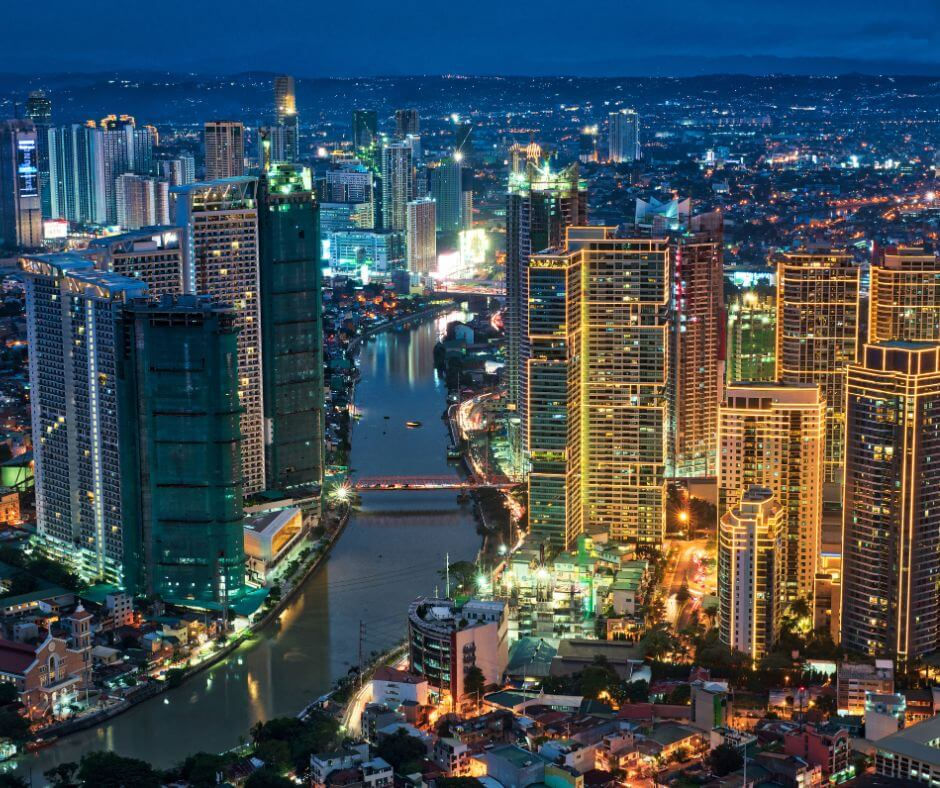
The Philippine economy has shown remarkable resilience and sustained growth over the past two decades, fueled by its young population, expanding middle class, and strong inflow of foreign investments. As one of Southeast Asia’s fastest-growing economies, the country continues to transform from an agricultural base into a dynamic service- and industry-driven economy.
A significant portion of the national budget is allocated to education and public services, supporting universities, literacy programs, and infrastructure development.
At the heart of this expansion is the service sector, particularly the Business Process Outsourcing (BPO) industry, which has become a major source of employment, foreign exchange, and economic stability. Meanwhile, key sectors such as agriculture, manufacturing, and tourism contribute to a well-rounded economic landscape.
Economic Growth
In recent years, the Philippines has recorded impressive and consistent economic growth, with a projected GDP growth rate of 5.7% in 2024. The nominal GDP is expected to reach US$507.7 billion in 2025, reflecting strong fundamentals and expanding domestic demand.
Key growth drivers include:
Service sector – Accounts for about 62.9% of GDP (2024), led by BPO, finance, and real estate.
Agriculture – Continues to support rural livelihoods despite modernization challenges and climate risks.
Tourism – Generates around 25% of tourism revenue from coastal activities such as diving, island tours, and beach resorts, underscoring the importance of natural attractions to economic performance.
Remittances from Overseas Filipino Workers (OFWs) – Provide a steady and reliable flow of income to millions of households, boosting consumption and reducing poverty.
While these achievements highlight economic strength, long-term prosperity depends on addressing infrastructure gaps, bureaucratic inefficiencies, and the impacts of climate change. Sustainable development and transparent governance remain critical to maintaining the country’s growth momentum.
Natural Resources
The Philippines is abundantly endowed with natural wealth, hosting proven reserves of about 361 million metric tons (as of 2023). These include valuable minerals, agricultural products, and marine resources, which form the backbone of many local economies.
The nation has one of Asia’s most extensive agricultural-research systems, though it faces funding and modernization challenges.
Its waters teem with over 3,200 fish species, making the country one of the world’s richest marine biodiversity zones.
In 2023, the Philippines exported 8.15 million metric tons of natural resources, reflecting the sector’s contribution to national revenue.
However, the exploitation of these resources also brings environmental challenges. Illegal mining, deforestation, and marine pollution continue to threaten ecosystems and communities. Promoting sustainable resource management and enforcing environmental regulations are vital steps toward preserving ecological balance while supporting long-term economic growth.
Tourism
Tourism remains one of the Philippines’ most vibrant and high-impact industries, contributing significantly to GDP and providing millions of jobs across the islands. The archipelago’s natural beauty, biodiversity, and cultural heritage draw travelers from all over the world.
Top destinations include:
Boracay and El Nido – Famous for their white sand beaches and crystal-clear waters.
Palawan Island, Tubbataha Reefs, and Apo Reef – Globally recognized dive sites and UNESCO-listed marine sanctuaries.
Historic cities and cultural landmarks – From Vigan’s Spanish-era architecture to the vibrant festivals of Cebu and Davao.
Tourism stimulates local entrepreneurship, encourages infrastructure development, and strengthens cultural preservation. As the industry grows, the government and local communities are focusing on sustainable tourism, ensuring that natural wonders and heritage sites remain protected for future generations.
A Growing Economy with Global Potential
The Philippine economy stands at a pivotal point — balancing rapid modernization with environmental sustainability and inclusive growth. Its success lies not only in numbers but in its people’s ingenuity and resilience. With continued investment in infrastructure, innovation, and education, the Philippines is poised to strengthen its position as a leading emerging economy in Asia, where tradition, talent, and transformation converge.

Demographics and Society
The Philippines is a vibrant and diverse nation of over 112 million people, spread across 7,617 islands that make up the archipelago. Its complex history of migration, trade, and colonization has created a rich mosaic of cultures, languages, and traditions. This diversity defines the Filipino identity — a blend of indigenous heritage and global influences shaped over centuries.
Understanding the country’s demographics offers valuable insight into its cultural diversity, linguistic richness, and religious life, all of which form the foundation of Filipino society.
Population
As of July 2024, the population of the Philippines is estimated at 112,729,484. The nation continues to grow steadily, driven by a young demographic and strong urban migration patterns.
Key population highlights:
Urbanization: About 54% of Filipinos now live in urban areas, reflecting the country’s ongoing shift from rural to city life.
Metro Manila: The capital region is the most densely populated in the country, home to roughly one-eighth of the total population.
Regional Centers: Cebu City in the Visayas and Davao City in Mindanao serve as major economic and cultural hubs, drawing residents from across the islands.
This rapid growth presents both opportunities and challenges. While it supports economic expansion and a vibrant cultural scene, it also heightens the need for effective urban planning, sustainable infrastructure, and social welfare systems to maintain livable, inclusive cities.
Ethnicity and Languages
The Philippines is home to a multitude of ethnic groups, each contributing to its diverse cultural fabric. The earliest settlers — Austronesians, who arrived around 3000 BCE — laid the foundations of Filipino civilization. Subsequent waves of migration and centuries of cultural exchange with India, China, the Middle East, and Europe further enriched the nation’s heritage. Buddhism, for example, is primarily practiced by Filipinos of Chinese descent, highlighting the influence of this demographic group on the country’s religious landscape.
Linguistic diversity is one of the Philippines’ most distinctive features:
Over 170 languages are spoken across the islands, most belonging to the Malayo-Polynesian family.
Filipino, based on Tagalog, and English are the official languages, widely used in education, government, and media.
Spanish and regional languages such as Cebuano, Ilocano, Hiligaynon, Waray, and Kapampangan remain vital in daily communication and local identity.
This multilingual environment reflects both adaptability and inclusivity, with many Filipinos fluent in two or more languages. It also fuels creativity in literature, media, and the arts, where languages often intertwine to express the nation’s collective spirit.
Religion
Faith plays a profound role in shaping Filipino values, traditions, and community life. Introduced during the Spanish colonial period, Christianity remains the dominant religion, making the Philippines the largest Christian-majority nation in Asia. The Roman Catholic Church has historically exerted considerable influence on Philippine political affairs, although the country's constitution mandates a separation of Church and State.
Religious composition:
Roman Catholicism – The faith of the majority, deeply woven into family and social traditions.
Islam (6.4%) – Practiced primarily in Mindanao, with vibrant communities in provinces such as Lanao del Sur, Sulu, and Maguindanao.
Protestant denominations, Iglesia ni Cristo, and indigenous spiritual traditions add to the country’s rich religious diversity.
Religious observances are central to Filipino life. Holy Week, Christmas, and local fiestas are celebrated with colorful processions, music, and communal feasts. These celebrations go beyond faith — they reflect a deep sense of unity, gratitude, and belonging that characterizes Filipino society.
A Nation of Many Faces, One Heart
The Philippines’ demographic and cultural diversity lies at the heart of its national identity. From its bustling urban centers to its remote mountain villages, the country embodies the spirit of unity in diversity. The Filipino people — resilient, warm, and faith-driven — remain the nation’s greatest resource, bridging tradition and modernity while shaping the future of Southeast Asia’s most colorful archipelago.

Culture
The culture of the Philippines is a vibrant blend of indigenous traditions, colonial legacies, and modern influences. At its heart lies the Filipino family, the cornerstone of social life and moral values. Family ties are characterized by deep loyalty, respect for elders, and a strong sense of interdependence that extends to relatives and even close family friends — often considered part of the family circle.
Filipino culture is best experienced through its festivals, arts, literature, and cuisine, each serving as a colorful reflection of the nation’s history, creativity, and communal spirit. Together, these expressions form the living soul of the Filipino people — joyful, resilient, and proudly diverse.
Festivals and Traditions
Festivals are a defining feature of Filipino life, showcasing the country’s faith, creativity, and sense of community. Many are rooted in religious devotion, while others celebrate harvests, history, and local legends.
Christmas and Holy Week are observed nationwide with grand processions, reenactments, and heartfelt family gatherings, reflecting the Philippines’ deep Christian faith.
The Ati-Atihan Festival in Kalibo, Aklan, bursts with energy and color as dancers in tribal costumes honor the Santo Niño (Holy Child).
The Giant Lantern Festival in San Fernando, Pampanga, lights up December nights with massive, intricate lanterns symbolizing hope and unity.
Other celebrated festivals such as Sinulog (Cebu), Panagbenga (Baguio), MassKara (Bacolod), and Dinagyang (Iloilo) blend faith, art, and community pride into unforgettable spectacles.
Beyond their visual splendor, these celebrations strengthen social cohesion and preserve traditions across generations. They are living testaments to the Filipino spirit — festive in adversity, united in faith, and proud of its cultural identity.
Arts and Literature
Filipino arts and literature embody the nation’s history, resilience, and evolving identity. Drawing from pre-colonial oral traditions, colonial influences, and modern thought, Philippine art continues to thrive across generations and genres.
Literature: Filipino literary heritage spans multiple languages — Filipino, English, and Spanish — showcasing a multilingual creativity unique to the archipelago. Classic works such as “Ibong Adarna” and “Florante at Laura” capture moral and poetic traditions, while José Rizal’s masterpieces “Noli Me Tángere” and “El Filibusterismo” awakened national consciousness during Spanish rule.
Visual and Performing Arts:
Damian Domingo is recognized as the Father of Filipino Painting, while Victorio Edades introduced Modernism into Philippine art.
The Balagtasan, a traditional poetic debate, and the Kundiman, a heartfelt love song, exemplify Filipino artistry in language and emotion.
Today, Filipino artists continue to innovate in literature, film, music, and design, using art as both a mirror of society and a medium for advocacy. These creative expressions celebrate national identity and tell the ongoing story of a people shaped by history yet always looking forward.
Cuisine
Filipino cuisine is a flavorful mosaic of indigenous recipes enriched by Spanish, Chinese, and American influences. Each dish reflects the archipelago’s diverse geography and multicultural history — a culinary narrative of adaptation and fusion.
Signature dishes include:
Adobo – The unofficial national dish, featuring meat marinated in vinegar, soy sauce, and garlic — savory, simple, and symbolic of Filipino ingenuity.
Sinigang – A comforting sour soup made with pork, shrimp, or fish and flavored with tamarind or native fruits.
Lechon – A whole roasted pig, the centerpiece of fiestas and celebrations.
Pancit – Various noodle dishes introduced by Chinese traders, now beloved across the islands.
Dining in the Philippines is inherently communal. Meals are shared among family and friends, reinforcing the Filipino values of hospitality, generosity, and togetherness. Food is more than sustenance — it is a bridge of connection, a reflection of identity, and an expression of joy.
The Heart of Filipino Culture
The culture of the Philippines is a living testament to resilience, creativity, and community. Rooted in tradition yet open to change, it thrives in the shared laughter of fiestas, the songs of its poets, and the warmth of its family gatherings. To understand Filipino culture is to experience its heartbeat — a rhythm of unity, faith, and enduring hope that continues to define the nation and its people.

Challenges and Issues
The Philippines faces a wide range of interconnected challenges that influence its development, governance, and overall quality of life. These include political and social inequalities, environmental degradation, and the growing threats of climate change. Together, they form a complex web of issues that the nation must confront to ensure long-term prosperity and resilience.
The following subsections examine these pressing concerns, emphasizing how history, governance, and environmental realities continue to shape the Philippines’ socio-political and ecological landscape.
Political and Social Issues
Politics and society in the Philippines are deeply intertwined, with corruption, political dynasties, and social inequality remaining among the most persistent challenges.
Political dynasties continue to dominate the national and local political arenas, concentrating power within a few influential families. This concentration often limits political competition, discourages reform-minded leadership, and perpetuates governance structures that prioritize personal or regional interests over the common good.
Corruption, both systemic and institutional, undermines public trust, policy implementation, and foreign investment, slowing progress across sectors such as education, healthcare, and infrastructure. The result is an uneven distribution of resources, with rural and marginalized communities bearing the greatest burden.
As of 2021, the country’s poverty rate stood at 18.1%, underscoring the deep-rooted inequalities that hinder inclusive growth. These social divides are further exacerbated by limited access to education, job opportunities, and public services.
Addressing these challenges requires:
Promoting transparency and accountability across government institutions.
Strengthening democratic processes and enforcing anti-corruption measures.
Encouraging inclusive governance that amplifies the voices of underrepresented sectors.
Building a more equitable society depends on reforming political systems, empowering local communities, and fostering civic engagement that prioritizes fairness and social justice.
Environmental Concerns
The Philippines’ natural environment — rich yet fragile — faces mounting pressure from unsustainable human activities and global environmental changes. The most pressing threats include:
Deforestation and illegal logging leading to habitat loss and soil erosion.
Illegal mining degrading watersheds and contaminating rivers.
Air and water pollution caused by industrialization and urban congestion.
Coral reef and coastal degradation, accelerated by overfishing and destructive practices such as dynamite fishing.
Wildlife extinction threatening the country’s rich biodiversity.
In 2023, the Philippines produced an estimated 156.2 million metric tons of CO₂ emissions, reflecting the environmental toll of industrial growth and urbanization. These pressures, combined with frequent natural disasters — including typhoons, earthquakes, and volcanic eruptions — pose significant risks to both human health and national development.
To confront these challenges, the Philippines must prioritize environmental conservation, sustainable resource management, and climate resilience. Key strategies include:
Expanding reforestation and marine protection programs.
Enforcing stricter environmental regulations against illegal and destructive practices.
Investing in renewable energy, green infrastructure, and climate-adaptation projects.
Sustainability is not just an environmental goal but a national imperative — vital for protecting the country’s natural wealth, supporting livelihoods, and ensuring a healthy future for generations to come.
A Call for Sustainable Progress
The path toward a stronger Philippines lies in transparent governance, social inclusion, and environmental stewardship. By addressing corruption, empowering communities, and protecting nature, the country can transform its challenges into opportunities for meaningful and lasting change — ensuring that growth benefits not only the present generation but the many more to follow.

Security and Defense: Safeguarding a Nation of Islands
A Strategic Location with Complex Challenges
The Philippines occupies a vital geopolitical position between the Pacific Ocean and the South China Sea, making it a key player in Southeast Asian security. With more than 7,600 islands and one of the world’s longest coastlines, the nation faces the dual challenge of defending its maritime borders and safeguarding its natural resources. This strategic yet vulnerable geography demands a comprehensive defense strategy that integrates land, air, and naval capabilities.
Lessons from History
The Philippines’ approach to national defense is deeply rooted in its history. From Spanish colonization to the devastation of World War II, the country has endured centuries of conflict that shaped its modern priorities. The struggles for independence instilled a lasting commitment to protecting both sovereignty and people — lessons that continue to guide its military doctrine today.
The Armed Forces: Guardians of Peace and Stability
The Armed Forces of the Philippines (AFP) — composed of the Army, Navy, and Air Force — serve as the cornerstone of national defense and internal stability. The broader security forces, including both military and police agencies, are responsible for maintaining national defense and internal order. The Philippine military has undergone significant modernization efforts to enhance its capabilities in response to evolving security challenges.
The Philippine Army plays a central role in internal security and counterinsurgency operations, particularly in combating insurgent groups and maintaining peace within the country. In the southern islands, especially Mindanao and surrounding areas, the military conducts extensive counterinsurgency and maritime security operations. The Moro Islamic Liberation Front (MILF) has been a key player in Mindanao's insurgency and peace process, shaping the region's security landscape through both conflict and negotiations.
Beyond defending borders, the AFP plays a crucial role in disaster response, counter-insurgency operations, and humanitarian missions. In Mindanao, the military continues to work toward peace and order, addressing long-standing insurgencies in resource-rich regions while supporting development and reconciliation.
Regional Alliances and Global Partnerships
National security extends beyond the archipelago’s boundaries. The Philippines actively participates in regional security frameworks such as ASEAN and maintains strong defense partnerships with allies including the United States, Japan, and South Korea. Joint exercises and defense cooperation agreements — particularly concerning the South China Sea — strengthen military readiness, enhance interoperability, and ensure the Philippines can respond effectively to emerging regional threats.
Modernization for a Stronger Future
Recognizing the importance of preparedness, the government continues to invest in military modernization through initiatives like the Philippine Defense Reform Program. These efforts focus on upgrading technology, equipment, and training, with priorities including maritime security, cybersecurity, and rapid disaster response. A modernized armed forces not only strengthen national defense but also bolster the Philippines’ capacity to support humanitarian operations and regional stability.
Stability as a Driver of Economic Growth
National security underpins the country’s economic progress. A stable environment encourages investment, sustains industries such as business process outsourcing (BPO), and promotes tourism. Safe destinations in Cebu, Davao, and Palawan continue to attract millions of travelers each year, proving that peace and security are essential foundations for prosperity.
Ongoing Threats and Natural Vulnerabilities
Despite continued progress, the Philippines remains exposed to multiple threats. Terrorism, piracy, and armed robbery at sea persist, especially in maritime zones like the Sulu Sea. The country’s location along the Pacific Ring of Fire also subjects it to frequent typhoons, earthquakes, and volcanic eruptions, testing the AFP’s capacity for rapid disaster response and civilian protection.
Building Peace Through Inclusive Development
The government recognizes that true and lasting security comes not only from military strength but also from social and economic stability. Programs like the Conditional Cash Transfer (CCT) aim to reduce poverty, address inequality, and uplift vulnerable communities — tackling the root causes of unrest and building peace from the ground up.
A Multifaceted Approach to a Secure Future
The Philippines’ security and defense strategy is comprehensive and forward-looking, balancing territorial protection, regional cooperation, and economic development. Continued investment in modernization, inclusive governance, and international partnerships ensures the country remains prepared to navigate the complex security dynamics of Southeast Asia and the Pacific.
Through unity, resilience, and reform, the Philippines continues its mission to safeguard a nation of islands — and the people who call it home.

Summary
The Philippines stands as a nation of extraordinary diversity and resilience, shaped by a rich tapestry of history, culture, and geography. From the flourishing communities of the pre-colonial era to the hard-fought struggles of colonization and independence, the country’s story is one of perseverance and pride. Each chapter of its history has molded a people who honor their heritage while striving toward a more progressive and inclusive future.
The nation’s geography and climate mirror its dual nature of beauty and challenge. The Philippines’ lush landscapes, pristine coastlines, and unparalleled biodiversity are sources of both national pride and economic strength, particularly through tourism and natural resources. Yet, its position along the Pacific Ring of Fire makes it highly vulnerable to typhoons, earthquakes, and the impacts of climate change, demanding ongoing adaptation, preparedness, and sustainable management.
In governance and economic development, the Philippines continues to make steady strides. Growth in sectors such as services, manufacturing, and technology reflects its potential, while persistent issues — including corruption, inequality, and environmental degradation — highlight the need for reform and accountability. Confronting these challenges is essential to ensure sustainable progress and improved quality of life for all Filipinos.
Ultimately, the heart of the Philippines lies in its people — resourceful, compassionate, and unyielding in the face of adversity. Their creativity, optimism, and unity remain the country’s greatest strengths, guiding the archipelago toward a future that honors its past while embracing new possibilities with courage and hope.
Frequently Asked Questions
What are the main geographical regions of the Philippines?
The Philippines is divided into three main geographical regions — Luzon, Visayas, and Mindanao. Each region contributes uniquely to the country’s cultural identity, economy, and natural diversity, shaping the Philippines into a richly varied archipelago.
When did the Philippines gain independence?
The Philippines gained full independence on July 4, 1946, marking the end of centuries of colonial rule under Spain and the United States. This historic milestone established the country as a sovereign republic, ushering in a new era of self-governance and national development.
What is the predominant religion in the Philippines?
Christianity, particularly Roman Catholicism, is the predominant religion in the Philippines. Introduced during Spanish colonization, it remains deeply woven into the nation’s traditions, values, and community life, making the Philippines the largest Christian-majority country in Asia.
What are some of the major festivals celebrated in the Philippines?
The Philippines is known for its colorful and lively festivals, each celebrating faith, history, or local identity. Among the most famous are the Ati-Atihan Festival in Kalibo, Sinulog Festival in Cebu, Panagbenga Festival in Baguio, MassKara Festival in Bacolod, and Dinagyang Festival in Iloilo. These vibrant celebrations embody the Filipino spirit of joy, unity, and resilience.
What are the key industries driving the Philippine economy?
The Philippine economy thrives on several major sectors:
Business Process Outsourcing (BPO) – A leading global industry that generates substantial employment and foreign exchange.
Agriculture – Supporting millions of rural livelihoods through crops like rice, coconut, and sugarcane.
Manufacturing – Focused on electronics, textiles, and consumer goods for export.
Tourism – Showcasing the country’s natural beauty and cultural heritage to the world.
Together, these industries serve as the pillars of economic growth, innovation, and national development.


♥️♥️♥️
Philippine heritage is the tallest thing.
#MabuhayPhilippines #TravelPhilippines #FilipinoCulture #KGMResorts
Uncover the Philippines' fascinating history, from ancient civilizations to modern-day triumphs, and explore its vibrant cultural traditions. 🇵🇭