
Philippine Forest Turtle: The Critically Endangered Turtle of Palawan

The Rarest Turtle in the Philippines
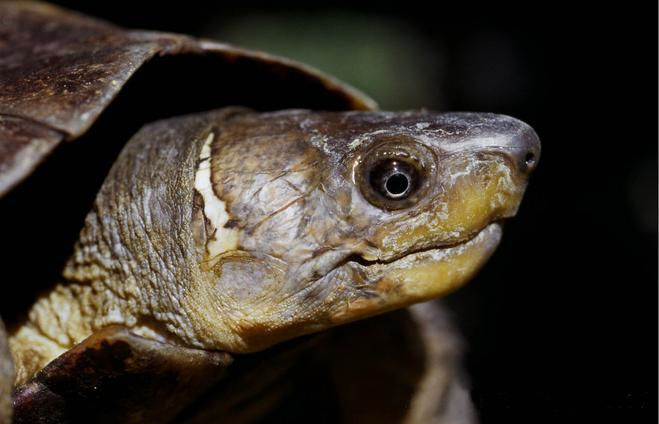
Deep within the shaded streams and forested wetlands of Palawan lives one of the world’s rarest reptiles—the Philippine Forest Turtle (Siebenrockiella leytensis). Quiet, elusive, and seldom seen in the wild, this freshwater species has become a symbol of both the Philippines’ extraordinary biodiversity and its urgent conservation challenges.
Classified as a critically endangered turtle in the Philippines, Siebenrockiella leytensis is considered one of the most threatened freshwater turtles on Earth. Its population has declined dramatically due to illegal collection and habitat destruction, placing it at the center of global conservation concern.
Despite its scientific name “leytensis,” the Philippine forest turtle does not naturally occur in Leyte. It is actually endemic to Palawan, making it a unique and irreplaceable part of Palawan wildlife. Restricted to forest streams and wetlands in northern Palawan, its extremely limited range makes it highly vulnerable to change.
Driven by the illegal wildlife trade and ongoing habitat loss, this species now stands on the brink. In the sections ahead, we’ll explore its ecology, behavior, conservation status, and—most importantly—how each of us can help protect one of the Philippines’ most endangered native turtles.
Table of Contents - Philippine Forest Turtle
Taxonomy and Scientific Background
The Philippine Forest turtle (Siebenrockiella leytensis) belongs to the family Geoemydidae, a diverse group of Asian freshwater turtles that includes many riverine and forest-adapted species. Within this family, it is one of the most geographically restricted members—making it a true endemic turtle of Palawan and one of the most significant reptiles in Philippine biodiversity.
A Confusing Naming History
The species was first described in the early 20th century from specimens reportedly collected in Leyte—hence the name leytensis. However, later field studies failed to find any populations there. Subsequent research confirmed that its natural range is actually confined to northern Palawan, making the scientific name somewhat misleading. Despite the geographic error, the name remains valid under zoological naming conventions.
Distinct from Other Southeast Asian Freshwater Turtles
In terms of turtle taxonomy in the Philippines, Siebenrockiella leytensis is distinct from other Southeast Asian freshwater turtles such as Cuora and Cyclemys species. It has a darker, more domed shell and unique head markings that differentiate it from related taxa. Genetic and morphological studies have reinforced its classification as a separate, highly localized species.
Rediscovery After Presumed Extinction
For decades, the Philippine forest turtle was considered possibly extinct due to a lack of confirmed sightings. It wasn’t until the early 2000s that researchers rediscovered living populations in Palawan. This rediscovery brought international attention to what is now recognized as one of the most endangered freshwater turtles in the Philippines—and sparked urgent calls for conservation action.
Today, the Philippine forest turtle stands not only as a case study in taxonomic clarification but also as a powerful reminder of how limited scientific knowledge and habitat loss can push species toward disappearance before they are fully understood.
Physical Characteristics – Built for Forest Streams
The Philippine Forest turtle has evolved to survive in shaded freshwater streams and forest wetlands. Its physical traits reflect both camouflage and adaptation to Palawan’s humid, lowland environments.
1. Dark Brown to Black Carapace
The shell is typically dark brown to nearly black, allowing it to blend seamlessly with muddy streambeds and leaf litter. This subdued coloration provides natural camouflage from predators and human disturbance.
2. Yellow or Cream Facial Markings
One of the key features for freshwater turtle identification is the subtle yellow or cream-colored streaking on the head. These markings distinguish it from other Southeast Asian turtle species and are important in confirming sightings of this rare Palawan turtle species.
3. Moderately Domed Shell
Unlike flatter river turtles, the Philippine forest turtle has a moderately domed carapace, giving it a sturdy, compact appearance. This shape helps protect vital organs while navigating debris-filled forest streams.
4. Semi-Aquatic but Forest-Adapted
Although classified as a freshwater turtle, it spends significant time near forested banks. It prefers shaded, slow-moving streams and swampy areas, showing clear adaptation to riparian forest ecosystems.
5. Medium Size – Up to 20 cm
Adults typically reach up to 20 centimeters in carapace length, making them medium-sized compared to other Asian freshwater turtles. Their compact build makes them agile in narrow stream channels.
6. Differences Between Males and Females
Sexual dimorphism is subtle. Males often have slightly longer and thicker tails, while females may have marginally broader shells to accommodate egg-laying. However, differences are less pronounced than in many other turtle species.

Habitat and Distribution – Hidden in Palawan’s Forests
The Philippine Forest turtle is one of the most geographically restricted reptiles in Southeast Asia. This rare species is confined to northern Palawan and a few nearby small islands, making it a true emblem of endemic species in Palawan.
Unlike marine turtles that roam vast oceans, this species inhabits quiet forest streams, freshwater swamps, and lowland river systems. It thrives in slow-moving waters shaded by dense vegetation, where fallen leaves, submerged roots, and muddy banks provide both shelter and feeding grounds. These environments are essential components of Palawan freshwater wildlife ecosystems.
The turtle shows a strong preference for undisturbed riparian habitats—areas where forests meet rivers. It relies on intact canopy cover to regulate water temperature and reduce human disturbance. While most populations are found in lowland zones, it can occur at slightly higher elevations as long as suitable freshwater microhabitats are present.
Because its survival depends on clean, shaded waterways, the Philippine forest turtle is highly sensitive to environmental changes. Logging, land conversion, and watershed degradation directly threaten its limited range. Protecting turtle habitat in the Philippines therefore means safeguarding entire forested watersheds—ensuring healthy rivers not only for this critically endangered turtle, but for countless other species that share its fragile ecosystem.
Behavior and Ecology – Life in the Shadows
The Philippine Forest turtle lives a quiet, hidden life in the shaded waterways of Palawan. Much of what we know about its habits comes from limited field observations, making its behavior both fascinating and still partly mysterious.
Mostly Nocturnal
This endangered reptile in the Philippines is primarily active at night. Nocturnal activity helps it avoid predators and human disturbance while foraging along streambanks and forest edges.
Shy and Secretive
The species is notoriously elusive. When threatened, it quickly retreats into water or hides beneath submerged roots and leaf litter. This secretive nature has made research challenging and contributes to the limited data on its population trends.
Omnivorous Diet
In terms of freshwater turtle behavior, it is opportunistic and omnivorous. Its diet includes fallen fruits, aquatic vegetation, insects, worms, and other small invertebrates found in forest streams. This flexible feeding strategy allows it to adapt to seasonal changes in food availability.
Ecological Role
As part of Philippine turtle ecology, the forest turtle plays an important role in maintaining ecosystem balance. By consuming fruits, it may assist in seed dispersal along waterways. Its feeding activity also contributes to nutrient cycling within freshwater habitats.
Nesting Behavior
Very little is documented about its nesting habits due to its rarity in the wild. Like many freshwater turtles, females are believed to lay eggs in sandy or soft soil near water sources, but confirmed data remain limited. This lack of knowledge underscores the urgent need for continued research and conservation monitoring.
Why It Is Critically Endangered
The Philippine Forest Turtle (Siebenrockiella leytensis) is listed as Critically Endangered on the IUCN Red List, placing it among the most threatened reptiles not only in the Philippines but in all of Asia. Its survival hangs on a fragile thread due to multiple overlapping threats.
Severe Pressure from the Illegal Wildlife Trade
One of the biggest drivers of decline is the illegal wildlife trade in the Philippines. This species is highly prized by collectors because of its rarity and limited distribution. Smuggling operations have targeted Palawan, removing individuals from already small wild populations.
High Demand in International Exotic Pet Markets
The turtle’s scarcity ironically increases its value in international exotic pet markets. As one of the most endangered turtle species in Asia, it commands high prices abroad. This demand fuels wildlife trafficking in Palawan, accelerating population collapse.
Habitat Destruction
Logging, agricultural expansion, and land conversion degrade the forest streams and wetlands the species depends on. Even minor disturbances to riparian zones can destroy nesting areas and feeding grounds.
Extremely Small and Fragmented Populations
Because the Philippine forest turtle exists only in limited areas of northern Palawan, its populations are small and fragmented. This makes recovery difficult and increases vulnerability to disease, climate events, and human interference.
Without strict enforcement, habitat protection, and sustained conservation efforts, this rare freshwater turtle faces an alarming risk of extinction within our lifetime.

The Illegal Pet Trade Crisis
Behind the decline of the Philippine forest turtle lies a growing and deeply concerning illegal pet trade crisis. Its rarity has turned it into a high-value target for collectors, both locally and internationally.
Black Market Demand for Rare Turtles
Rare species command high prices. As one of the most endangered freshwater turtles in Asia, the Philippine forest turtle is sought after in the exotic pet trade for turtles, where scarcity increases desirability. Collectors often prioritize unusual and geographically restricted species—making Palawan’s endemic turtle especially vulnerable.
Online Wildlife Trafficking Networks
Modern trafficking no longer happens only in backroom deals. Social media platforms, encrypted messaging apps, and online marketplaces have made it easier to connect buyers and sellers. These digital networks have intensified wildlife trafficking in the Philippines, allowing illegal trade to operate across borders with alarming efficiency.
Seizures and Enforcement in Palawan
Authorities in Palawan have conducted seizures of illegally collected turtles destined for international markets. While these enforcement actions demonstrate progress, they also reveal the scale of the problem. Each confiscation underscores the ongoing Palawan conservation crisis, where protected wildlife continues to be smuggled despite legal safeguards.
Ecological Consequences of Over-Collection
Removing individuals from already small populations has devastating long-term effects. Over-collection reduces breeding numbers, disrupts population structure, and weakens genetic diversity. For a species with limited distribution, even small-scale harvesting can trigger rapid collapse.
Why Captive Demand Harms Wild Populations
Contrary to popular belief, demand for captive specimens often fuels wild capture rather than reduces it. Rare turtles are frequently laundered through breeding claims, making enforcement difficult. As long as collectors seek wild-sourced individuals, pressure on natural populations remains high.
The illegal pet trade is not just a law enforcement issue—it is a direct threat to biodiversity. Combating wildlife trafficking in the Philippines is essential if the Philippine forest turtle is to survive beyond the next generation.
Conservation Efforts and Protection Programs
Saving the Philippine forest turtle requires coordinated action—from national legislation to grassroots community involvement. While the species remains critically endangered, several protection programs are working to secure its future.
Protection Under the Philippine Wildlife Act (RA 9147)
The Philippine Forest turtle is legally protected under the Wildlife Resources Conservation and Protection Act (RA 9147). This law prohibits the collection, possession, transport, and trade of threatened wildlife species without proper authorization. Violations can result in fines and imprisonment, making it a critical legal tool in turtle conservation in the Philippines.
Local Conservation Initiatives in Palawan
On the ground, Palawan conservation efforts focus on habitat monitoring, community engagement, and anti-poaching patrols. Field researchers conduct population assessments, while conservation groups work to identify key freshwater habitats that require urgent protection.
Role of the Palawan Council for Sustainable Development (PCSD)
The Palawan Council for Sustainable Development (PCSD) plays a central role in regulating land use and biodiversity protection across the province. By enforcing environmental policies and coordinating with law enforcement agencies, PCSD helps safeguard critical habitats where the turtle survives.
International Conservation Collaborations
The species has drawn global attention due to its rarity. International conservation organizations collaborate with local authorities to support research, capacity building, and anti-trafficking operations. These partnerships strengthen protection efforts and bring global expertise into local conservation programs.
Community Education and Anti-Trafficking Campaigns
Long-term protection depends on community awareness. Educational campaigns inform residents about the importance of protecting endangered reptiles and the legal consequences of wildlife trade. Encouraging local stewardship helps transform communities into frontline defenders of their natural heritage.
Through legislation, science, enforcement, and education, efforts to protect endangered reptiles like the Philippine forest turtle are slowly building momentum. However, sustained commitment remains essential to ensure this rare Palawan species does not disappear.
Why the Philippine Forest Turtle Matters
The Philippine Forest turtle is more than just a rare reptile—it is a living barometer of environmental health and a symbol of what is at stake in Palawan’s shrinking wilderness.
Indicator of Freshwater Ecosystem Health
As a species dependent on clean, shaded streams, the turtle serves as an indicator species for freshwater systems. Its presence signals healthy riparian habitats, stable water quality, and intact forest cover. When populations decline, it often reflects broader problems within the ecosystem.
A Pillar of Philippine Biodiversity
The Philippines is recognized globally as a biodiversity hotspot, and the forest turtle is a unique piece of that natural heritage. Protecting it strengthens efforts to conserve other species that share the same habitat—fish, amphibians, invertebrates, and native plants. In this way, it contributes to the broader mission of safeguarding Philippine biodiversity.
Protecting Watersheds Through Species Conservation
Efforts aimed at the turtle’s survival inevitably lead to freshwater conservation in the Philippines. Preserving forest streams and wetlands ensures stable water sources not only for wildlife but also for nearby communities that depend on these watersheds for drinking water and agriculture.
A Symbol of Palawan’s Ecological Balance
Endemic to a small corner of the archipelago, the Philippine forest turtle embodies the delicate balance of Palawan ecosystem protection. Its fate is intertwined with the province’s forests, rivers, and biodiversity. If this species disappears, it would signal a deeper unraveling of the ecological systems that sustain life in Palawan.
In protecting this turtle, we are not saving a single species—we are preserving the integrity of entire freshwater ecosystems and reinforcing the commitment to protect one of the last strongholds of wild nature in the Philippines.

How You Can Help
Protecting the Philippine forest turtle starts with informed and responsible choices. While conservation programs and laws are essential, individual action plays a powerful role in safeguarding this critically endangered species.
Never Buy Wild-Caught Turtles
Avoid purchasing turtles from markets, online sellers, or private collectors. Demand fuels the illegal wildlife trade and refusing to buy wild-caught animals is one of the most direct ways to help endangered turtles.
Report Illegal Wildlife Trade
If you encounter suspicious wildlife sales—online or in person—report them to local authorities or environmental agencies. Public vigilance strengthens enforcement and helps combat wildlife trafficking in the Philippines.
Support Credible Conservation NGOs
Donate to or volunteer with reputable organizations working on turtle conservation in the Philippines. Supporting research, habitat protection, and anti-poaching initiatives helps protect Palawan wildlife for the long term.
Practice Responsible Ecotourism in Palawan
When visiting Palawan, choose eco-friendly tours and respect protected areas. Avoid disturbing wildlife or entering restricted habitats. Responsible tourism contributes to local economies while promoting Palawan ecosystem protection.
Spread Awareness
Use your voice to educate others. Share reliable information on social media about endangered species and wildlife conservation tips in the Philippines. Awareness builds support—and support drives change.
Every small action contributes to a larger movement. By making conscious choices, we can help ensure that the Philippine forest turtle remains part of the country’s living natural heritage.
Takeaway – A Turtle Worth Saving
The Philippine Forest turtle (Siebenrockiella leytensis) is one of the rarest reptiles on Earth—an elusive freshwater species found only in the forests of Palawan. Its survival reflects the health of shaded streams, intact watersheds, and thriving riparian ecosystems. As an indicator of freshwater stability and a unique part of
Philippine biodiversity, it carries ecological importance far beyond its modest size.
Yet its future remains uncertain. Pressured by illegal wildlife trade, habitat destruction, and small fragmented populations, this critically endangered turtle stands at a crossroads. Without sustained protection, research, and enforcement, it could quietly disappear from the wild.
Protecting the Philippine forest turtle means protecting Palawan’s forests and waterways. Forest conservation is species conservation. When we defend watersheds, curb wildlife trafficking, and support community-led protection, we safeguard not just one turtle—but entire ecosystems.
The choice is ours.
Support conservation. Defend the forests. Protect the waters. Let this rare turtle remain a living symbol of the Philippines’ extraordinary natural heritage.
Frequently Asked Questions
Is the Philippine Forest Turtle found in Leyte?
No. Despite its scientific name, the Philippine Forest Turtle is not found in Leyte. It is actually endemic to northern Palawan and nearby small islands. The name “leytensis” resulted from early specimen records that were later corrected through field research.
Why is it called Siebenrockiella leytensis?
The species was originally described from a specimen believed to have come from Leyte. Although later studies confirmed its true range in Palawan, zoological naming rules require the original scientific name to remain valid. Today, Siebenrockiella leytensis is widely recognized as a Palawan endemic turtle species.
How many Philippine Forest Turtles are left?
Exact numbers are unknown due to the turtle’s secretive behavior and remote habitat. However, conservation assessments classify it as Critically Endangered, with extremely small and fragmented populations. Ongoing monitoring efforts aim to better understand its remaining numbers in the wild.
Can the Philippine Forest Turtle be kept as a pet?
No. The species is protected under Philippine law (RA 9147), and collecting, possessing, or trading it is illegal. Keeping this turtle as a pet contributes to wildlife trafficking and threatens its survival.
Where can I see one in the wild?
The Philippine Forest turtle lives in remote forest streams of northern Palawan. Because it is critically endangered and highly sensitive to disturbance, sightings are rare. Responsible wildlife viewing should always follow local conservation guidelines and avoid disturbing natural habitats.



It is such an emotional article about the Philippine Forest Turtle – it truly emphasizes the need for immediate preservation of biodiversity in Palawan. For people who wish to tell similar stories through the power of writing, a forest self book publisher can definitely assist them to do so.
Glad that there is non profit like Endangered Species International working hard to save the endangered Philippine forest turtle.
Turtle is a aquatic species.
The Philippine Forest Turtle's story is heartbreaking, but it's amazing to see efforts being made to protect it and its habitat. We need to do more to protect these incredible creatures and the forests they call home...
As part of Philippine turtle ecology, the forest turtle plays an important role in maintaining ecosystem balance. By consuming fruits, it may assist in seed dispersal along waterways. Its feeding activity also contributes to nutrient cycling within freshwater habitats.