
Tricycle in the Philippines: Complete Travel Guide for First-Time Visitors

What Is a Philippine Tricycle?
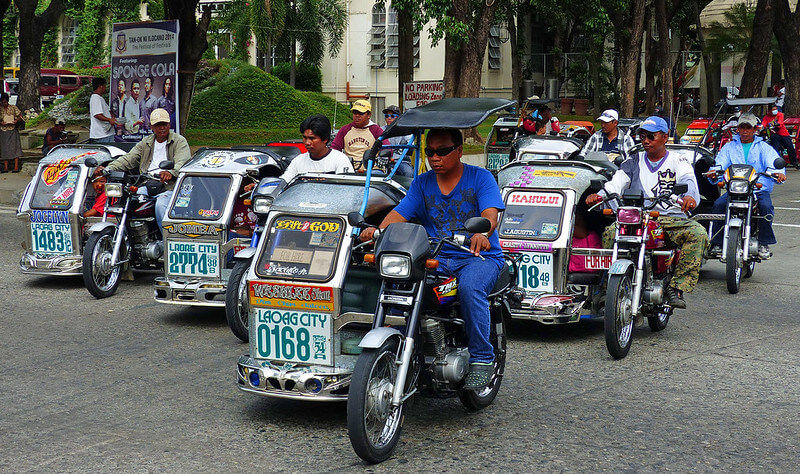
A tricycle in the Philippines is a motorcycle fitted with a sidecar, designed to carry passengers over short distances. Unlike bicycles with three wheels found in other countries, the Philippine tricycle is motorized and built for practical, everyday mobility. It is one of the most common forms of public transportation Philippines offers, especially in small towns, residential neighborhoods, and island communities.
In daily life, tricycles serve as essential local transport in the Philippines, connecting homes to markets, schools, jeepney terminals, and municipal centers. For many Filipinos, the tricycle is the first and last ride of the day—bridging the gap between main roads and inner barangays. In tourism, tricycles play an equally important role. Travelers rely on them to reach beaches, homestays, ports, and hidden attractions that larger vehicles cannot access.
What makes the Philippine tricycle different from similar vehicles abroad is its community-based system. In many areas, tricycles operate within designated zones under local government regulation. Drivers often belong to organized associations, and terminals are strategically placed throughout towns. This structure gives the tricycle a uniquely Filipino character—informal yet organized, simple yet indispensable.
In this guide, you will learn about the history of the Philippine tricycle, how it works, how fares are calculated, safety tips for visitors, and why it remains a vital part of Filipino transport culture. Whether you are researching how to ride a tricycle in the Philippines or simply curious about everyday mobility in the country, this article will help you understand one of the most practical and culturally significant transport systems in the archipelago.
Table of Contents - Tricycle in the Philippines
History and Origins of the Philippine Tricycle
The history of tricycle Philippines transport is rooted in practicality and local innovation. As motorcycles became more widely available in the mid-20th century, especially in provincial towns, they offered an affordable and efficient alternative to larger vehicles that were difficult to maintain on rural roads.
Early Introduction of Motorcycles in Provincial Towns
In the postwar years, motorcycles began appearing more frequently in smaller municipalities where buses and jeepneys were limited or unavailable. These towns often had narrow roads, unpaved streets, and scattered residential areas. Motorcycles were easier to maneuver and required less fuel, making them ideal for short-distance travel.
As communities expanded, the need for affordable passenger transport increased—especially for residents traveling between barangays, public markets, schools, and municipal halls.
Adaptation of Sidecars for Passenger Transport
The origin of the Philippine tricycle lies in a simple modification: attaching a sidecar to a motorcycle. Local mechanics and metal fabricators began building custom sidecars to carry passengers safely and efficiently. These sidecars were constructed from metal frames with roofs for shade and rain protection.
What started as an informal solution quickly became standardized across many towns. Local governments began regulating routes and fares, and driver associations formed to manage operations within designated zones.
Growth as a Solution for Short-Distance Mobility
Unlike jeepneys, which operate on longer fixed routes, tricycles became the primary form of postwar local transport for short, neighborhood-level trips. They filled a crucial gap in the transport system—serving as what is now often called “last-mile connectivity.”
For residents living far from main highways, the tricycle was not a convenience but a necessity. It connected rural communities to essential services and strengthened economic activity within towns.
Evolution of Designs Over the Decades
Over time, tricycle designs evolved to meet changing needs and regulations. Some became fully enclosed for safety and weather protection, while others remained partially open for ventilation in the tropical climate. In recent years, certain areas have introduced electric tricycles to address environmental concerns and fuel costs.
Despite these changes, the core concept remains the same: a practical, adaptable vehicle built around community needs.

What Does a Philippine Tricycle Look Like?
At its core, the Philippine tricycle design is simple but highly functional: a motorcycle fitted with a passenger sidecar. Yet across the country, this basic structure takes on many forms depending on local needs, climate, and regulations.
Structure: Motorcycle + Sidecar Cabin
A standard tricycle consists of:
A motorcycle that serves as the engine and steering unit
A sidecar cabin attached to one side, built with a metal frame
A roof for protection from sun and rain
The tricycle sidecar Philippines commuters are familiar with is typically welded onto the motorcycle frame for stability. Unlike a typical motorcycle taxi in other countries, the Philippine tricycle is designed to carry multiple passengers at once, not just one rider behind the driver.
Design Variations by Province
There is no single national design. Instead, tricycles vary significantly by region:
In some towns, sidecars are compact and box-like, designed for narrow roads.
In coastal or island communities, they may be slightly larger to accommodate beach-bound passengers.
In more urban areas, some tricycles are painted with bright colors and include route markings or association names.
Local government regulations often influence design standards, including maximum passenger capacity and safety features.
Enclosed vs. Open-Air Sidecars
Some tricycles feature fully enclosed sidecars with metal panels, plastic windows, and doors for added safety and weather protection. Others are more open-air, allowing better ventilation in hot climates but offering less protection during heavy rain.
The level of enclosure often depends on:
Climate conditions
Urban vs. rural setting
Local safety policies
Seating Capacity and Passenger Layout
Most tricycles are designed to carry:
One driver
One to three passengers inside the sidecar
Occasionally one passenger behind the driver (in some areas)
Seating is compact, and passengers often sit side-by-side inside the cabin. Because space is limited, tricycles are best suited for short-distance travel.
Where Tricycles Operate
Tricycles are a cornerstone of short-distance mobility across the Philippines, particularly in areas where larger vehicles cannot easily navigate. Understanding where tricycles operate helps travelers use them effectively as part of local transport.
Urban Neighborhoods: Restricted to Smaller Streets
In major cities, tricycles are typically restricted to secondary roads and residential areas. They are not allowed on major highways or primary thoroughfares. Instead, they operate within neighborhoods, providing last-mile connectivity between homes, small businesses, and main roads where jeepneys, buses, or trains are available.
This structure ensures that tricycles complement rather than compete with larger public transport systems.
Provincial Towns and Barangays
In provincial areas, tricycles play an even more critical role. They function as primary barangay transport, connecting rural households to:
Public markets
Schools and universities
Municipal halls
Health centers
Jeepney or bus terminals
For many residents, tricycles are the most reliable way of getting around provincial towns in the Philippines, especially where road infrastructure is limited.
Coastal and Island Communities
In coastal municipalities and smaller islands, tricycles are often the dominant land-based transport option. They move passengers between:
Ports and ferry terminals
Beach resorts and homestays
Fishing villages and town centers
Because of narrow roads and compact settlements, tricycles are more practical than larger vehicles in these settings.
Transport Between Terminals, Markets, and Homes
One of the most common uses of tricycles is bridging the gap between transport hubs and final destinations. They frequently serve as connectors between:
Bus or jeepney terminals and residential areas
Wet markets and surrounding neighborhoods
Town centers and outer barangays
Unlike jeepneys, which follow longer fixed routes, tricycle routes in the Philippines are usually confined to specific zones. Drivers operate within designated service areas regulated by local governments.

How Tricycles Work: A Step-by-Step Guide for Travelers
For first-time visitors, understanding how to ride a tricycle in the Philippines can make local travel smoother and more comfortable. Tricycles operate differently from buses or jeepneys, but once you know the system, they are one of the easiest ways to move around towns and neighborhoods.
1. Finding a Tricycle Terminal
In most municipalities, tricycles operate from designated terminals located near:
Public markets
Barangay halls
Bus or jeepney terminals
Town plazas
Ports and ferry docks
Drivers typically queue at these terminals and wait for passengers. In smaller towns, terminals are clearly marked. In tourist areas, hotel staff can direct you to the nearest official pickup point.
Using a terminal is often the safest and most organized way to begin your ride.
2. Flagging Down a Unit
Outside terminals, you may also flag down a passing tricycle, especially in provincial areas. Simply stand near the roadside and signal the driver with a raised hand.
Before boarding, clearly state your destination. Drivers will inform you if:
The location is within their service zone
They need to adjust the fare
You must transfer to another tricycle
3. Private Ride vs Shared Ride
Depending on the town, tricycles may operate in two ways:
Private Ride
You hire the entire unit.
The driver takes you directly to your destination.
The fare is usually higher but fixed for the trip.
Shared Ride
Multiple passengers share the same tricycle.
The route may include several stops.
Each passenger pays individually.
In tourist destinations, private rides are more common. In residential areas, shared rides may still operate.
4. How Fares Are Calculated
The tricycle fare in the Philippines is typically:
Distance-based
Regulated by the local government
Posted at terminals (in many areas)
However, in tourist spots, fares may be slightly higher or negotiable. To avoid confusion:
Confirm the fare before boarding
Ask if the price is per person or for the whole vehicle
Carry small bills for easier payment
5. Payment System (Cash-Based)
Most tricycles operate on a cash-only system. There are no digital meters or payment apps in most towns.
Best practices:
Pay the driver directly at the end of the ride
Have exact change if possible
Avoid large bills for short distances
Unlike jeepneys, you do not pass the fare through other passengers. Payment is made directly to the driver.
How Much Does a Tricycle Ride Cost?
Understanding the tricycle fare Philippines system helps travelers avoid confusion and budget properly. Tricycles are generally considered cheap transport Philippines offers, especially for short-distance rides within towns and barangays.
Typical Base Fares
In many municipalities, tricycles operate with a base fare set by the local government. This base rate typically covers a short ride within a specific zone. Prices vary by location, but in provincial towns, base fares are usually affordable compared to taxis or ride-hailing services.
Distance-Based Pricing
The tricycle cost Philippines commuters pay depends largely on distance. Common pricing structures include:
Zone-based fares – fixed rates within designated barangay areas
Per-kilometer adjustments for longer trips
Special trip fees if you hire the tricycle privately
Longer distances, uphill routes, or late-night trips may cost more. Always clarify if the fare is per person or for the entire vehicle.
Tourist vs Local Pricing
In tourist-heavy destinations, fares may be slightly higher than standard residential rates. This can happen because:
Drivers assume visitors are hiring private rides
Tourist destinations are farther from terminals
Some drivers factor in waiting time
While many drivers follow official rates, travelers should be aware that informal adjustments can occur in popular areas.
Negotiation Practices in Tourist Areas
Negotiation is sometimes acceptable in tourist towns, especially for longer distances. However:
Be respectful and polite
Avoid aggressively bargaining over small amounts
Ask locals or hotel staff for the typical rate beforehand
In most cases, once a price is agreed upon before boarding, both parties honor it.
Tips for Confirming Fare Before Riding
To ensure a smooth experience:
Ask for the total fare before entering the tricycle.
Confirm whether the rate is per person or for the whole ride.
Carry small bills and coins for easier payment.
If unsure, ask a nearby local for the usual price range.
Taking a few seconds to confirm the fare prevents misunderstandings and keeps your experience positive.

Tricycle vs Jeepney: What’s the Difference?
Understanding the difference between a tricycle and a jeepney helps travelers make smarter decisions when getting around the Philippines. Both are essential parts of the transport system, but they serve different purposes. This Philippines public transportation comparison breaks down their key differences.
Route Flexibility
Tricycle
Operates within a specific barangay or zone
Offers door-to-door or near-door service
Can adjust routes within its service area
Jeepney
Follows fixed routes along main roads
Displays destinations on signage
Flexible stops but limited to designated routes
Distance Suitability
Tricycle
Ideal for short distances
Best for last-mile travel between terminals and homes
Common in provincial towns and small islands
Jeepney
Designed for medium-distance travel within cities
Connects major roads, commercial centers, and transport hubs
Comfort and Capacity
Tricycle
Carries 1–3 passengers in the sidecar
Compact seating
Limited luggage space
Jeepney
Carries 15–20 passengers or more
Bench seating along both sides
More space but can be crowded during rush hours
Jeepneys accommodate more people, while tricycles offer more privacy when hired for a private ride.
Price Comparison
In a typical tricycle vs jeepney comparison:
Jeepneys are usually cheaper per person for longer distances.
Tricycles cost more per kilometer but provide direct service.
Private tricycle rides may cost more than shared jeepney fares.
Both options remain affordable compared to taxis or ride-hailing services.
When to Choose Each
Choose a tricycle if:
You need short-distance, neighborhood travel
Your destination is off the main road
You are in a provincial town or island
Choose a jeepney if:
You are traveling along a major road
You need a low-cost option for medium distances
You want to experience a more communal transport setting
Both vehicles are essential to daily life in the Philippines. Knowing when to use each ensures smoother travel while giving you insight into how local transport systems function across cities and provinces.
Safety Tips for Riding Tricycles
Tricycles are a practical and widely used form of local transport, but like any public vehicle, it’s important to ride with awareness. These tricycle safety tips will help ensure safe travel in the Philippines, especially for first-time visitors.
Confirm the Fare Before Boarding
One of the most important steps is to agree on the fare before you sit down. Politely ask the driver:
The total cost of the ride
Whether the fare is per person or for the entire vehicle
If there are additional charges for distance or waiting time
Sit Securely and Protect Your Belongings
Tricycles are compact, and seating space can be tight. To stay safe:
Sit fully inside the sidecar and avoid leaning outward
Keep bags on your lap or secured between your feet
Avoid placing valuables near open sides
Hold your phone discreetly, especially in busy areas
Avoid Late-Night Rides in Isolated Areas
While most tricycle rides are uneventful, it’s best to:
Avoid riding late at night in poorly lit or unfamiliar neighborhoods
Choose well-populated areas with active terminals
Use alternative transport (such as ride-hailing services or hotel-arranged transfers) after dark
Choose Licensed Drivers and Official Terminals
For added security:
Use official tricycle terminals rather than random roadside pickups when possible
Look for vehicles marked with registration numbers or local association signage
Ask hotel staff or locals for trusted pickup points
Licensed drivers operating within regulated zones are typically more accountable and reliable.
Tricycles remain an essential part of everyday mobility across the country. By following these simple precautions, travelers can enjoy convenient short-distance transport while maintaining safe travel in the Philippines standards.

The Role of Tricycles in Filipino Communities
Beyond being a mode of transport, tricycles are deeply woven into the social and economic fabric of towns and barangays across the Philippines. They are not just vehicles—they are livelihoods, connectors, and pillars of everyday mobility.
A Source of Livelihood for Families
For thousands of households, driving a tricycle is a primary source of income. Many tricycle drivers in the Philippines either own their units or rent them through boundary systems, earning daily income based on completed trips.
This means:
Transport directly supports family expenses
Earnings help fund education, food, and housing
Small-scale operators contribute to grassroots economic activity
In many provincial towns, tricycle driving is one of the most accessible forms of self-employment.
A Community-Based Transport System
Unlike large corporate bus or rail networks, tricycles operate as community transport in the Philippines. Drivers are often organized into local associations or cooperatives that:
Assign routes within barangay zones
Manage terminal queues
Coordinate fare structures
Ensure basic operational standards
Because drivers usually live within the same communities they serve, they know the streets, families, and routines of their passengers.
Importance in Rural Mobility
In rural areas where buses and jeepneys may not reach, tricycles provide essential access to:
Public markets
Health clinics
Schools
Government offices
This makes them critical to local economy transport in the Philippines, especially in areas with limited infrastructure. Without tricycles, many residents would face difficulty accessing basic services.
Local Government Regulation
Tricycle operations are typically regulated by local government units (LGUs).
Regulations may include:
Fare matrices
Franchise permits
Assigned service zones
Driver accreditation
These rules aim to maintain order and protect both passengers and drivers. While enforcement varies by municipality, the system is designed to balance accessibility with accountability.
Modernization and Environmental Challenges
As towns expand and traffic increases, tricycles face new pressures. While they remain essential to local mobility, they are also part of broader conversations about congestion, pollution, and transport reform in the Philippines.
Traffic Congestion Concerns
In densely populated cities and growing municipalities, the sheer number of tricycles can contribute to road congestion—especially on narrow streets. Because tricycles move at slower speeds and frequently stop for passengers, they can affect traffic flow in busy areas.
Local governments often respond by:
Restricting tricycles from main highways
Limiting operations to specific barangay zones
Reorganizing terminals to reduce roadside congestion
Noise and Emissions Issues
Traditional gasoline-powered tricycles produce exhaust emissions and engine noise. In high-density neighborhoods, this can raise concerns about:
Air pollution
Carbon emissions
Fuel efficiency
Noise levels in residential communities
Introduction of Electric Tricycles (E-Trikes)
One major development is the rollout of the electric tricycle Philippines commuters are beginning to see in select towns and cities. Also known as e-trikes in the Philippines, these vehicles:
Run on battery-powered electric motors
Produce zero tailpipe emissions
Operate more quietly than gasoline models
Lower long-term fuel costs for drivers
Several pilot programs and local initiatives have introduced e-trikes as part of sustainability efforts. Adoption varies depending on funding, infrastructure, and driver affordability.
Government Regulation and Reforms
Transport modernization is closely tied to broader transport reform in the Philippines. Reforms typically focus on:
Franchise requirements and driver accreditation
Environmental compliance standards
Fleet consolidation into cooperatives
Phased replacement of older units
While modernization efforts aim to improve safety and environmental performance, challenges remain. The cost of upgrading vehicles can be significant for small operators, and infrastructure for charging electric units is still developing in many areas.

Cultural Significance of the Tricycle
The tricycle is more than a small vehicle navigating narrow streets—it is a reflection of tricycle culture in the Philippines and a daily presence in communities across the country. Quietly and consistently, it shapes the rhythm of neighborhood life.
A Fixture in Everyday Filipino Life
From early morning market runs to late-afternoon school pickups, tricycles are embedded in Filipino daily life transport. They connect homes to sari-sari stores, public plazas, churches, and town centers. In many barangays, the sound of a tricycle engine signals the beginning of the day.
Unlike large buses or trains, tricycles operate at a personal scale. Drivers often know their passengers by name. Regular commuters may ride with the same driver for years, building familiarity and trust.
Neighborhood Interaction and Social Ties
Tricycles are part of the social fabric of local communities. Because they serve specific zones, drivers become familiar with families, routines, and neighborhood events. This creates a form of transport rooted in relationships rather than anonymity.
Passengers may:
Share quick updates about local happenings
Ask drivers for directions or recommendations
Exchange greetings and casual conversation
Informal Conversations and Local Connection
The short ride in a tricycle often becomes a space for informal conversation. Visitors might learn about local festivals, nearby attractions, or even family histories during a brief trip.
For travelers, this offers insight into local culture in the Philippines beyond tourist districts. These small exchanges create meaningful cultural moments that larger transport systems rarely provide.
Representation in Tourism and Photography
Though less iconic than jeepneys, tricycles appear frequently in travel photography and provincial tourism materials. They represent:
Small-town life
Island communities
Everyday movement in rural landscapes
Many visitors, riding a tricycle is one of the first intimate experiences of local life outside airports and hotels.
Travel Tips for First-Time Visitors
Navigating local transport for the first time can feel overwhelming, especially in smaller towns and island communities. These practical travel tips for Philippines transport will help you confidently decide when to ride a tricycle and when to choose alternatives.
When to Use Tricycles
Tricycles are best used for:
Short distances within barangays or small towns
Trips between bus/jeepney terminals and accommodations
Reaching beaches, ports, or residential neighborhoods
Traveling in areas where larger vehicles don’t operate
They are ideal for “last-mile” transport and are often the easiest way to move around provincial towns.
When to Choose Alternatives (Grab, Taxi, Jeepney)
There are situations when other options may be more practical:
Grab or Taxi – Better for long distances, late-night travel, or when carrying luggage
Jeepney – More affordable for medium-distance routes along main roads
Bus or Train – Ideal for intercity or high-traffic urban corridors
In larger cities like Manila, ride-hailing services provide added comfort and predictable pricing, especially for travelers unfamiliar with local zones.
Practical Phrases to Know
“Magkano po?” – How much?
“Hanggang dito lang po.” – I’ll get off here.
“Salamat po.” – Thank you.
Politeness goes a long way in local communities.
How to Avoid Common Tourist Mistakes
To make your ride easier:
Always confirm the fare before boarding
Ask whether the price is per person or for the whole tricycle
Carry small bills and coins
Avoid riding in isolated areas late at night
Use official terminals whenever possible
Following these simple steps ensures a smoother experience and aligns with this tourist transport guide Philippines visitors can rely on.

Takeaway – Why the Tricycle Still Matters
The tricycle may be small in size, but its role in Philippine mobility is significant. As this tricycle Philippines guide has shown, it is more than a convenient ride—it is a lifeline for communities, a source of livelihood for families, and a defining part of everyday movement across towns and barangays.
From connecting homes to markets and terminals to supporting rural access where larger vehicles cannot operate, the tricycle remains one of the most practical forms of local transport. Its presence reflects the adaptability and resourcefulness that define Filipino transport culture—community-based, accessible, and rooted in real daily needs.
For travelers, riding a tricycle offers something beyond transportation. It provides a closer look at neighborhood life, local interaction, and the rhythm of small-town Philippines. When experienced respectfully—by confirming fares, choosing licensed drivers, and observing local etiquette—it becomes part of an authentic cultural encounter.
If you want to understand how mobility truly works in the country, don’t just stick to airports and highways. Step into everyday systems. Ride a tricycle, try a jeepney, take a provincial bus, or hop on a ferry between islands. These experiences allow you to explore the Philippines locally, beyond the typical tourist routes.
Frequently Asked Questions
Are tricycles safe for tourists?
Yes, tricycles are generally safe, especially during the daytime and in populated areas. They are widely used by locals, students, and families. For added safety:
Confirm the fare before boarding
Keep belongings secure
Avoid late-night rides in unfamiliar or poorly lit areas
Use official terminals when possible
Like any form of local transport, basic awareness goes a long way.
Do tricycles operate 24 hours?
Operating hours depend on the municipality.
In busy towns and tourist areas, some tricycles may operate late into the evening.
In smaller barangays, operations may slow down after 8–10 PM.
They are not universally 24-hour services, so it’s best to arrange alternative transport if traveling late at night.
Can I negotiate fares?
In most towns, fares are regulated by local government and posted at terminals. However:
In tourist destinations, negotiation may be common—especially for private rides.
Always confirm whether the price is per person or for the entire vehicle.
Polite discussion is acceptable but avoid aggressive bargaining over small amounts.
Are tricycles available in Metro Manila?
Yes, but with restrictions. In Metro Manila, tricycles are generally limited to smaller streets and residential zones. They are not allowed on major highways or primary roads.
For long-distance travel within the city, jeepneys, buses, trains, or ride-hailing services are more practical.
Are electric tricycles common?
Electric tricycles (e-trikes) are gradually being introduced in some municipalities as part of modernization efforts. They are more common in selected cities and pilot programs but have not fully replaced gasoline-powered units nationwide.
Availability varies by province.



Tricycle has three wheels.
Philippine tricycle is an integral part of the country's culture and history, it's amazing to see how it has become a symbol of Filipino resilience and resourcefulness...
The origin of the Philippine tricycle lies in a simple modification: attaching a sidecar to a motorcycle. Local mechanics and metal fabricators began building custom sidecars to carry passengers safely and efficiently. These sidecars were constructed from metal frames with roofs for shade and rain protection.