
Philippines Bangka: The Outrigger Boat of the Country

Updated: Oct 23, 2025
A Vessel of Culture and Survival

In an archipelago of more than 7,000 islands, the sea has always been more than just a body of water—it is a lifeline, a highway, and a cultural thread that has carried generations of the diverse communities of the Philippines. At the heart of this maritime tradition is the philippines bangka—the iconic outrigger sailboat that has long defined Filipino seafaring life.
Also spelled banca, the bangka is instantly recognizable for its narrow main hull and stabilizing bamboo outriggers, or katig, designed to glide swiftly across coastal waters and open seas. These outriggers extend from one side and sometimes both sides of the boat, connected by sturdy booms, providing essential balance and stability. But it is more than a means of transportation. From pre-colonial traders and fishermen to modern island-hopping guides and sea-based indigenous groups, the bangka has served generations as a vital tool for survival, mobility, and livelihood.
Culturally, the bangka represents adaptation and ingenuity. Built from wood, bamboo, and sometimes even fiberglass today, its design reflects the Filipinos’ deep knowledge of their marine environment. Whether ferrying passengers board for island hopping tours, hauling nets, or racing under brightly decorated sails, the bangka remains a vessel of both function and meaning.
This blog explores the bangka not just as a boat, but as a living symbol of the Philippines' enduring connection to the sea—an emblem of identity, craftsmanship, and coastal resilience.
Origins and Ancestry – Seafaring Roots of the Bangka
Austronesian Heritage
The origins of the bangka trace back thousands of years to the Austronesian-speaking peoples—early seafarers who navigated vast stretches of the Pacific and Indian Oceans, reaching as far as Madagascar. These maritime ancestors are believed to have migrated from Taiwan and Southeast Asia, eventually settling in the Philippine archipelago and beyond.
Their remarkable ability to build seaworthy boats and read the ocean’s signs laid the foundation for the Philippines’ enduring boat culture. The oldest recovered boats in the Philippines are the 9 to 11 balangay found in Butuan, which highlight the deep historical roots of Filipino seafaring traditions.
The Dugout Beginnings
Early bangkas were carved from large tree trunks—known as dugout canoes—with hulls hewn by hand using stone or metal tools. These boats often featured lashed planks or bamboo outriggers tied together with natural fibers, a hallmark of Austronesian boatbuilding that provided balance and speed on rough coastal waters. This technique not only preserved the boat’s flexibility but also made repairs easier, suiting the demands of island living
Life in the Barangay Society
In pre-colonial Philippines, society was organized around coastal and riverine communities known as barangays, a term derived from balangay, the larger ancestor of the bangka. These boats were central to trade, migration, and warfare, serving as floating communities and status symbols for chieftains and traders. Bangka were also used in wars and naval warfare, showcasing their versatility and importance in pre-Hispanic Filipino culture. Boatbuilding was a sacred and communal activity, passed down through generations as both a livelihood and a cultural inheritance.
The bangka, therefore, is not merely a boat—it is a vessel of heritage, a reminder of the Philippines’ deep ancestral bond with the sea

Key Features of a Traditional Bangka – Form Meets Function
Outriggers (Katig) for Stability
The defining feature of a bangka is its pair of bamboo outriggers, or katig, extending from either one side or both sides of the main hull. These provide lateral stability, making the boat nearly unsinkable even in choppy coastal waters. This design innovation allows the bangka to navigate reefs, surf zones, and open seas with ease.
Streamlined Hull Design
Traditional bangkas are built with a long, narrow hull that cuts through water efficiently. Lightweight yet durable, the hull’s shape ensures speed and agility—essential for fishing, inter-island travel, and escaping sudden tropical squalls.
Local and Sustainable Materials
Historically, bangkas were made using locally sourced hardwoods like mahogany or lawa-an for the hull and bamboo for outriggers. The use of natural lashings (e.g., rattan or abaca) allowed for slight flexibility, which helped the boat absorb wave energy. The hull of the bangka at its simplest form had five parts, reflecting the ingenuity of traditional boat-building techniques. In modern times, many bangkas have adopted fiberglass hulls for durability and easier maintenance, though wood remains in use for its traditional value. Fiberglass versions are also cheaper to maintain and help save trees, addressing environmental concerns.
Multiple Means of Propulsion
Depending on the design and purpose, bangkas can be powered in several ways:
Paddles for nearshore travel or river use
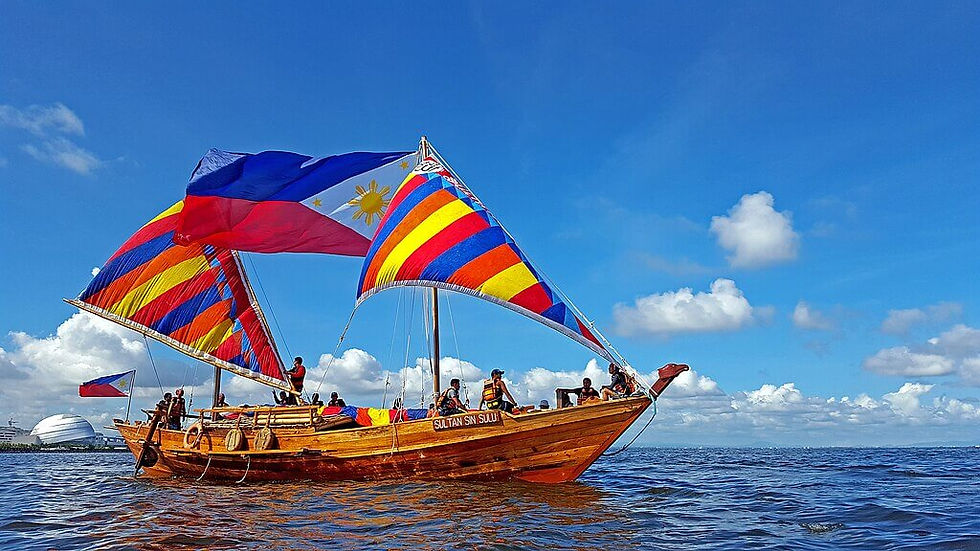
Sails (layag) for wind-powered navigation, especially in older or traditional communities, making them true outrigger sailboats
Small motor engines, usually gasoline or diesel, for greater speed and longer distances, especially in modern pump boats used for island hopping tours and cargo transport
Types of Bangka Across the Philippines – A Nation of Nautical Diversity
Paraw – The Flying Sailboats of the Visayas
The paraw is a double-outrigger sailing bangka widely seen in the Visayas region. It features a large triangular sail (layag) and a slender hull that glides swiftly across water, making it ideal for trade, fishing, and even racing. In Boracay, paraws are iconic sunset vessels and a symbol of traditional maritime elegance.
Balangay – The Ancient Vessel of Migration and Unity
Known as the “Mother Boat,” the balangay is a large plank-built boat used by ancient Filipinos for inter-island trade and long-distance voyages as early as the 4th century CE. Excavated from Butuan, it is a declared National Cultural Treasure and a symbol of the Philippines’ Austronesian maritime heritage.
Lepa – The Floating Homes of the Badjao
The lepa is the traditional boat of the Badjao or Sama Dilaut people, sea nomads of Mindanao. These boats are often colorfully carved and serve both as homes and transport. Lepa vessels are featured prominently in the annual Regatta Festival in Tawi-Tawi and Zamboanga.
Subanen Bangka – Riverine Craft of the Zamboanga Peninsula
Crafted by the Subanen people, this type of bangka is adapted for inland waterways and shallow coastal areas. Smaller and lighter, it’s suited for fishing, gathering, and daily tasks in rivers and estuaries across western Mindanao.
Modern Pump Boats – The Workhorses of Inter-Island Travel
Motorized bangkas, often called pump boats or lancha, are the most common contemporary evolution of traditional bangkas. Used for passenger transport, diving trips, and cargo hauling, they feature a small motor engine and remain vital to rural and island connectivity across the country. These boats provide convenient and affordable transportation, connecting remote islands and marine sanctuaries.
Each type of bangka tells a story—not just of utility, but of heritage, innovation, and identity in a maritime nation.
The Bangka in Daily Life and Culture – More Than Just a Boat
A Lifeline for Livelihood
In countless coastal communities across the Philippines, the bangka remains indispensable. Fisherfolk use it daily to access rich fishing grounds, while traders and small-scale vendors depend on it to transport goods between islands and marketplaces. The industry of bangka fishing employs millions of Filipinos and provides a primary source of livelihood for many. In remote areas, it’s often the only means of reaching neighboring towns or health services.
Integral to Island-Hopping and Local Travel
From Palawan to Siargao, bangkas are the trusted vessels for island-hopping adventures, ferrying tourists and locals to hidden coves, diving sites, and distant islets. Their shallow hulls and stable outriggers make them ideal for navigating coral reefs and narrow beach landings, making travel safer and more convenient. Island tours with bangkas offer a unique journey through the Philippines’ beautiful marine sanctuaries.
Cultural and Spiritual Symbolism
The bangka plays a role in various rituals—from sea burials and offerings to ancestral spirits, to processions during maritime festivals like the Fluvial Parade of Cebu’s Sinulog or the colorful Regatta de Zamboanga. These ceremonies honor both the sea and the spirits believed to protect travelers. Bangka feature prominently in Visayan mythology, such as the balanday used by the deity Magyan to ferry souls of the dead, further emphasizing their cultural and spiritual significance.
An Heirloom of Skill and Craftsmanship
Boatbuilding is often a generational craft, passed from parent to child. Using time-honored methods and local materials, artisans shape each bangka by hand—often without formal blueprints. The building of bangka often involved various religious rituals in precolonial Philippines, including choosing trees for timber and conducting performances before voyages. These vessels embody not only function but pride, tradition, and identity for families and villages.
In the Philippines, the bangka is more than transportation—it is an enduring part of life, spirit, and survival across the archipelago.
Celebrating Bangka: Philippine Heritage Month and Beyond
Each year during Philippine Heritage Month, communities and explorers join in celebrating the rich maritime traditions embodied by the bangka. Festivities often include parades, regattas, and cultural exhibitions showcasing decorated bangkas and traditional sailing styles.
These events invite locals and visitors alike to join in honoring this word that carries the weight of history and culture. Whether you're watching a regatta or participating in a parade, the celebrations are sure to bring a smile as you experience the joy and pride of bangka heritage.
Challenges and Modern Adaptations – Navigating Change
Climate Change and Coastal Vulnerability
Rising sea levels, coastal erosion, and stronger typhoons pose serious threats to communities that rely on bangkas. Traditional docking areas and boatyards are increasingly flooded or damaged, and rougher seas challenge the stability of smaller, older vessels.
Material Scarcity and Modern Substitutes
The dwindling supply of quality hardwoods like lawaan and mahogany has prompted a shift to fiberglass hulls, which are more durable and easier to maintain. While purists lament the loss of traditional craftsmanship, fiberglass bangkas offer a practical solution for many, especially for commercial transport and tourism.
Engines Replace Sails and Paddles
With efficiency in mind, many bangkas have transitioned from sail- or paddle-powered to engine-propelled. This shift allows for faster travel and broader reach but also increases fuel costs and dependency on imported parts. Some newer designs now blend traditional aesthetics with modern engineering.
Regulation and Safety Standards
The rise in bangka-based tourism and inter-island transport has led to tighter government oversight. The Maritime Industry Authority (MARINA) and Philippine Coast Guard enforce regulations to improve safety—requiring life vests, passenger limits, and regular inspections. While essential, compliance can be costly for small-scale operators.

Challenges and Modern Adaptations – The Changing Tides of the Bangka
The iconic bangka, long a symbol of resilience and tradition, now faces the pressures of a rapidly changing world. While still central to Filipino coastal life, these boats are adapting to environmental, material, and regulatory shifts.
Climate and Coastal Vulnerability Stronger typhoons, unpredictable weather patterns, and rising sea levels are increasingly disrupting fishing seasons and damaging small boats. Storm surges threaten boatyards, while intense winds and rougher seas put traditional wooden bangkas at risk. Communities dependent on bangkas must now rethink mooring strategies and seasonal routines.
Material Shifts and Design Evolution Traditional bangkas made from hardwood like lawaan or mahogany are now harder to build due to deforestation and cost. In response, many communities have embraced fiberglass hulls—lighter, more durable, and easier to repair. While these boats lack the warmth and artistry of carved timber, they offer resilience for daily use and commercial viability.
Engines Over Sails Increased reliance on small diesel engines has improved mobility but reduced the use of wind-powered sailing traditions. Though more efficient for transport and tourism, this shift raises concerns over fuel cost, maintenance, and carbon footprint.
Safety and Regulation As bangkas become more commercially used—especially for island-hopping tours and passenger routes—government agencies like MARINA and the Philippine Coast Guard have stepped in. Strict compliance with life jackets, boat inspections, and operator training is essential but challenging for small-scale operators with limited resources.
In adapting to modern needs, the bangka remains afloat—but it now sails a delicate balance between preservation and progress.
Conservation and Cultural Preservation – Keeping Maritime Heritage Afloat
As the tides of modernity reshape coastal life, efforts to preserve the bangka’s legacy have become essential. Across the Philippines, cultural advocates, artisans, and communities are working together to ensure this symbol of seafaring identity continues to inspire future generations.
As the tides of modernity reshape coastal life, efforts to preserve the bangka’s legacy have become essential. Across the Philippines, cultural advocates, artisans, and communities are working together to ensure this symbol of seafaring identity continues to inspire future generations.
Reviving the Balangay and ancient maritime traditions through replica expeditions and educational programs.
Community workshops and boat-building schools teaching traditional and modern bangka construction techniques.
Cultural events and festivals like the Paraw Regatta Festival in Iloilo celebrate bangka culture through colorful sailboat races and craftsmanship exhibits.
Through these preservation efforts, the bangka is not merely remembered—it is lived, raced, built, and celebrated, ensuring that this floating emblem of Filipino culture remains anchored in both memory and motion.

Frequently Asked Questions (FAQ) – Bangka of the Philippines
What is a bangka?
A bangka (also spelled banca) is a traditional Filipino outrigger boat, used primarily for fishing, transport, and inter-island travel. It features one or two outriggers (katig) for stability and is commonly seen throughout the Philippine archipelago.
What is the difference between a bangka and a balangay?
A bangka is a general term for small outrigger boats used in daily life, while the balangay is an ancient plank-built boat used for long-distance trade and migration. The balangay is larger, historically significant, and now considered a National Cultural Treasure.
Are traditional bangkas still used today?
Yes. While many have been modernized with fiberglass hulls and engines, traditional wooden bangkas are still widely used in fishing villages and remote islands, especially where modern alternatives are impractical or costly.
Can tourists ride a bangka?
Absolutely. Bangka rides are common in coastal tourism areas for island hopping, snorkeling, and diving tours. Always ensure the boat has proper safety gear and a licensed operator.
Are there festivals or events featuring bangkas?
Yes. One of the most famous is the Paraw Regatta Festival in Iloilo City, celebrating traditional sailboats with races and cultural showcases. Other coastal communities also host local regattas and sea-based celebrations.
Why are outriggers used in bangka design?
Outriggers (katig) provide lateral stability, preventing the boat from capsizing in choppy or open water—especially vital for navigating the seas surrounding the Philippines' 7,000+ islands.
Takeaway – A Floating Legacy
The bangka is far more than a humble boat—it is a vessel of Filipino resilience, craftsmanship, and identity. For centuries, it has carried fishermen across open seas, transported goods and stories between islands, and connected communities across an archipelago shaped by water. Each katig (outrigger), sail, and carved hull tells a tale of adaptation, survival, and pride.
As the Philippines continues to modernize, preserving this maritime heritage becomes even more vital. Traditional boat-building knowledge—passed down through generations—must be protected, celebrated, and sustained alongside innovations that ensure safety and environmental responsibility.
Travelers and locals alike can help keep the legacy afloat. Whether by supporting bangka-based tourism, participating in boat festivals, or simply learning about their historical significance, every effort contributes to honoring the bangka’s role in shaping the Filipino story.
Step aboard, listen to the waves, and rediscover a living tradition that continues to sail through time. If you are interested in learning more about bangka boats, island tours, or want to receive updates on related topics, consider subscribing or reaching out for more information.


Bangka is Part of my childhood
Philippines is surrounded with water, and our craftsmanship has helped Filipinos a lot to explore, survive and make history using bangka.
Great read ❤️
Bangka ❤️
Also spelled banca, the bangka is instantly recognizable for its narrow hull and stabilizing outriggers, designed to glide swiftly across coastal waters and open seas. But it is more than a means of transportation. From pre-colonial traders and fishermen to modern island-hopping guides and sea-based indigenous groups, the bangka has served generations as a vital tool for survival, mobility, and livelihood.