
Filipino Merienda Culture Explained: The Philippines' Beloved Snack-Time Tradition

More Than Just a Snack

What can a simple afternoon snack reveal about Filipino culture and everyday life?
In the Philippines, the answer can be found in merienda—the beloved tradition of enjoying something to eat between the day's main meals. Whether it's a quick mid-morning bite or an afternoon break before dinner, merienda has become a familiar rhythm of everyday Filipino life.
But Filipino merienda culture is about much more than satisfying hunger. It might mean warm pandesal with coffee, freshly cooked pancit shared among coworkers, banana cue bought from a neighborhood vendor, or traditional kakanin prepared at home. Merienda can be sweet or savory, simple or surprisingly filling.
More importantly, merienda creates time for people. Families gather, children enjoy snacks after school, friends meet over coffee, and visitors are welcomed with something to eat. In a culture where sharing food is closely connected to hospitality and togetherness, even a small snack can become an expression of care.
Merienda is not simply another meal. It is a daily Filipino tradition where food, family, friendship, and hospitality come together—often around something delicious.
Table of Contents - Filipino Merienda Culture Explained
What Is Filipino Merienda?
So, what is merienda? In the Philippines, merienda refers to a snack or light meal enjoyed between the day's main meals. It is a familiar part of everyday life, providing a chance to pause, eat, and often spend time with others.
The word merienda comes from Spanish, reflecting centuries of Spanish influence on Philippine culture. Over time, however, Filipinos made the tradition distinctly their own by incorporating local ingredients, regional specialties, street foods, breads, and rice-based delicacies.
Merienda in the Philippines generally happens at two times:
Morning merienda – enjoyed between breakfast and lunch
Afternoon merienda – eaten between lunch and dinner, often after school or during a break from work
What makes Filipino merienda unique is its variety. A merienda can be as simple as pandesal with coffee, a piece of turon, or banana cue from a street vendor. But it can also be surprisingly filling, with dishes such as pancit, arroz caldo, palabok, or even a bowl of lugaw.
There are few strict rules about what qualifies as merienda. Sweet or savory, light or hearty, it is ultimately about enjoying a welcome break in the day—preferably with something delicious to share.

Why Merienda Matters in Filipino Culture
In the Philippines, merienda is more than a break between meals. It is a small but meaningful part of everyday life—a chance to pause, share food, and reconnect with the people around you. This simple tradition reflects some of the values at the heart of Filipino merienda culture: family, community, hospitality, generosity, and togetherness.
A Pause in the Day
Merienda creates a natural break from the day's responsibilities. In workplaces, coworkers may gather over coffee, bread, pancit, or other snacks. The food may be simple, but the conversations and laughter turn an ordinary break into a social experience.
For children, afternoon merienda is often connected to coming home from school. A plate of pandesal, turon, banana cue, or another favorite snack can become part of childhood routines and memories.
Food Brings People Together
At home, merienda provides another opportunity for families to gather. Neighbors may stop by friends may visit, and food is often placed on the table for everyone to share.
This is where merienda becomes closely connected to Filipino food traditions. When visitors arrive, offering something to eat or drink is a natural expression of hospitality. Even an unexpected guest may quickly hear an invitation to join the table.
Sharing merienda does not require an elaborate meal. Sometimes coffee and bread are enough. What matters is the gesture—the willingness to share what is available and make another person feel welcome.
In this way, merienda represents something much larger than snack time. It transforms an ordinary moment in the day into an opportunity for connection, generosity, and community—values that continue to shape everyday Filipino life.
Traditional Filipino Merienda Favorites
One of the joys of Filipino merienda is its incredible variety. Depending on where you are in the Philippines, snack time might mean freshly baked bread from a neighborhood bakery, colorful Filipino kakanin from a local market, or something sweet and crispy from a street vendor.
These traditional Filipino merienda foods range from simple everyday snacks to delicacies associated with celebrations and family traditions.
Bakery Favorites
Neighborhood bakeries have long been part of everyday Filipino life, offering affordable breads that pair perfectly with coffee, milk, or hot chocolate.
Pandesal
Perhaps the Philippines' most iconic bread, pandesal is a soft bread roll coated in fine breadcrumbs. Although commonly eaten for breakfast, it is equally popular for merienda. Filipinos enjoy it plain or filled with cheese, butter, peanut butter, or other spreads.
Ensaymada
A soft, rich pastry traditionally topped with butter, sugar, and grated cheese. With its combination of sweet and salty flavors, it is a favorite companion to coffee or hot chocolate.
Spanish Bread
Despite its name, Spanish Bread is a familiar Filipino bakery favorite. The soft rolled bread contains a sweet, buttery breadcrumb filling, making it an affordable and satisfying afternoon snack.
Pan de Coco
Filled with sweetened coconut, Pan de Coco reflects the importance of coconut in Philippine cuisine. Its soft bread and rich tropical filling make it especially enjoyable with a warm drink.
Kakanin: Traditional Filipino Rice Delicacies
Kakanin refers to a broad family of traditional Filipino delicacies commonly made with sticky rice or rice flour, often combined with coconut milk and sugar. Sold in markets, roadside stalls, and neighborhood shops, these foods remain an important part of Filipino merienda culture.
Puto
Puto is a soft steamed rice cake with a mild sweetness. Numerous regional and modern variations exist, and it can be enjoyed on its own or alongside savory dishes.
Kutsinta
Known for its chewy texture and distinctive appearance, kutsinta is commonly served with freshly grated coconut. Its subtle sweetness makes it a classic afternoon merienda.
Suman
Suman is typically made from glutinous rice cooked with coconut milk and wrapped in banana or palm leaves. Depending on the region, it may be eaten with sugar, ripe mango, or other accompaniments.
Bibingka
Bibingka is a traditional rice cake especially associated with the Christmas season. Often cooked in banana leaf-lined molds, it is cherished for its soft texture, distinctive aroma, and comforting flavor.
Street-Food Merienda Favorites
Some of the most memorable Filipino merienda experiences happen on the street. Vendors near schools, markets, transportation areas, and neighborhoods sell inexpensive snacks throughout the day.
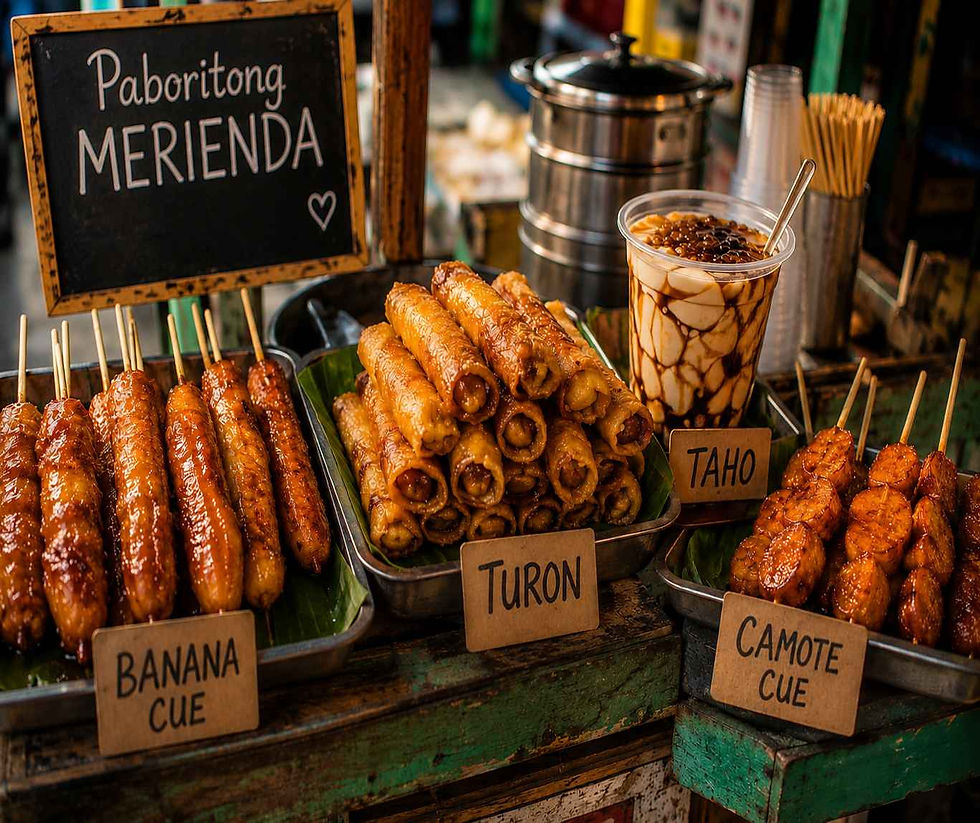
Banana Cue
Banana cue features saba bananas coated in caramelized brown sugar and traditionally served on bamboo skewers. Sweet, sticky, and filling, it is one of the country's classic street snacks.
Turon
Turon consists of saba banana wrapped in a thin spring-roll wrapper and fried until crisp, usually with caramelized sugar. Some versions include jackfruit for additional sweetness and aroma.
Taho
For generations, the call of a neighborhood taho vendor has been a familiar sound in many Filipino communities. Taho combines warm silken tofu with sweet syrup and tapioca pearls, creating one of the country's most recognizable street foods.
Camote Cue
Similar to banana cue, camote cue is made from slices of sweet potato coated in caramelized brown sugar and served on skewers.
From warm pandesal and colorful kakanin to freshly fried turon and banana cue, these traditional Filipino snacks show just how diverse merienda can be. More importantly, they represent everyday flavors and food traditions that generations of Filipinos continue to share and enjoy.

When Merienda Becomes a Meal
One of the most interesting things about Filipino merienda is that a "snack" does not always mean something small. While bread, kakanin, and street food are popular choices, merienda can also include noodles, rice porridge, soup, or a substantial steamed bun. Sometimes, it can feel almost like another meal.
This reflects the flexibility of Filipino food culture. For students coming home from school, workers taking an afternoon break, or families gathering before dinner, a heartier merienda can provide welcome comfort and energy.
Heartier Filipino Merienda Favorites
Pancit
Refers to a wide variety of Filipino noodle dishes prepared with different noodles, vegetables, meats, seafood, and seasonings. Served in homes, eateries, and gatherings, it is one of the country's most versatile merienda choices.
Palabok
Features rice noodles covered in a savory sauce and topped with ingredients that may include shrimp, egg, garlic, and other garnishes. Rich and satisfying, it turns afternoon snack time into something much more substantial.
Arroz Caldo and Lugaw
Warm rice porridges are classic Filipino comfort food. Arroz caldo, commonly prepared with chicken, ginger, and garlic, is especially comforting on rainy days. Lugaw offers a simpler but equally warming alternative.
Sopas
Creamy Filipino sopas combines macaroni, milk, vegetables, and usually chicken or another protein. Its warmth and richness make it a favorite during cooler or rainy weather.
Siopao
For something filling but convenient, siopao is a popular choice. These soft steamed buns contain savory fillings and are easy to enjoy on the go.
Champorado
Champorado is a sweet chocolate rice porridge traditionally made with glutinous rice and cacao. Warm, rich, and comforting, it is enjoyed for breakfast or merienda and is sometimes paired with salty dried fish.
More Than a Small Snack
These hearty Filipino snack foods show why merienda is difficult to define by portion size alone. It can be a quick bite or nearly a complete meal.
What matters most is the moment—a satisfying pause between the day's main meals and another opportunity to enjoy food, comfort, and company.
Regional Merienda Traditions Across the Philippines
With more than 7,000 islands and countless local food traditions, there is no single way to experience merienda in the Philippines. Ingredients, recipes, and preparation methods change from province to province, making snack time another delicious expression of the country's regional diversity.
From the rice-growing communities of Luzon to the coconut-rich Visayas and the distinctive culinary traditions of Mindanao, regional Filipino food gives merienda a different character wherever you travel.
Luzon: Rice Cakes, Noodles, and Bakery Traditions
Across Luzon, rice, noodles, and freshly baked breads have shaped generations of merienda traditions.
Popular choices include:
Kakanin – Traditional rice delicacies such as puto, kutsinta, suman, and many regional varieties.
Pancit – Luzon's provinces are home to numerous noodle traditions, often served during merienda, family gatherings, and celebrations.
Pandesal – A simple and affordable favorite enjoyed with coffee, hot chocolate, or a variety of fillings.
Ensaymada and bakery breads – Sweet breads and pastries remain popular afternoon treats in towns and cities.
Together, these foods reflect Luzon's strong rice-growing heritage as well as the bakery traditions that have become part of everyday Filipino life.
Visayas: Coconut, Bananas, and Local Delicacies
The Visayas offers a different merienda experience, shaped by abundant coconut, bananas, root crops, and rice.
Traditional favorites include:
Binignit – A comforting coconut milk-based dish commonly prepared with glutinous rice, root crops, bananas, and sago.
Budbud – A sticky rice delicacy traditionally wrapped in leaves, with variations found across the Visayas.
Banana delicacies – Bananas appear in numerous sweet snacks and local preparations.
Coconut-based treats – Coconut milk and grated coconut are important ingredients in many regional delicacies.
Many of these foods highlight the tropical ingredients that grow abundantly throughout the central Philippines.
Mindanao: Diverse Traditions and Influences
Mindanao's merienda traditions reflect the island's remarkable cultural and culinary diversity.
Common influences and ingredients include:
Rice delicacies – Rice and glutinous rice appear in numerous traditional preparations.
Cassava-based foods – Cassava is transformed into cakes and other sweet snacks.
Coconut – An important ingredient in many local dishes and delicacies.
Moro culinary traditions – In Muslim Filipino communities, distinctive rice delicacies, pastries, and other traditional foods add another dimension to Mindanao's merienda culture.
Indigenous food traditions – Local ingredients and preparation methods vary among Mindanao's many Indigenous communities.
These influences make Mindanao one of the most culturally distinctive regions for exploring Filipino food.
A Different Merienda Across the Islands
The beauty of merienda in the Philippines lies in this diversity. Travel from Luzon through the Visayas to Mindanao, and familiar ingredients such as rice, coconut, bananas, and cassava take on entirely new forms and flavors.
There is no single Filipino merienda—and that is precisely what makes the tradition so fascinating. Every region adds its own ingredients, recipes, memories, and stories to one of the Philippines' most beloved everyday food traditions.
Merienda, Family, and Filipino Hospitality
In the Philippines, merienda is often about more than what is served on the table. It is about who gathers around it. Afternoon snack time creates a natural opportunity for families, friends, and neighbors to pause, reconnect, and share something together.
An Afternoon Family Tradition
For many Filipinos, memories of merienda begin at home. Children returning from school may find a snack waiting in the kitchen, while parents or grandparents prepare something simple for the family.
It might be:
Warm pandesal from the neighborhood bakery
Banana cue or turon
Homemade kakanin
Pancit shared by the family
Coffee or hot chocolate alongside bread
Grandparents often play a special role in these memories. Recipes and food traditions passed from one generation to another can turn an ordinary afternoon snack into something deeply connected to family and home.
"Kain Tayo": An Invitation to Share
Filipino hospitality is also easy to see during merienda. When someone arrives while food is being served, it is common to hear "Kain tayo"—literally, "Let's eat."
The invitation may be casual, but its meaning goes deeper. Food is meant to be shared, and making room for another person at the table is a simple way of making them feel included.
Families may prepare extra servings in case someone visits, while snacks are frequently shared with neighbors, friends, or coworkers. Even when there is not much food available, offering what is there can be an expression of generosity.
A Simple Way of Saying "You Are Welcome"
This is what makes merienda such a meaningful part of Filipino culture. Hospitality does not always require an elaborate feast. Sometimes it is a cup of coffee, a few pieces of pandesal, or a plate of kakanin placed in the middle of the table.
Offering merienda is often another way of saying, "You are welcome here."
Through these small acts of sharing, merienda reflects some of the values at the heart of Filipino life—family, generosity, belonging, and the belief that food is always better when enjoyed together.
Merienda and Childhood Memories
For many Filipinos, merienda is closely connected to childhood. Long after the afternoon snack is finished, its familiar sounds, aromas, and flavors can remain part of treasured memories of home.
A morning call of "Taho!" from a vendor walking through the neighborhood might send children rushing outside with cups in hand. After school, a few coins could buy banana cue or another favorite street snack before heading home. A visit to the neighborhood bakery meant the comforting aroma of freshly baked pandesal, Spanish Bread, or ensaymada.
Some memories were created in the family kitchen. Grandparents prepared kakanin using recipes passed down through generations, while children watched, helped, and waited for the first taste. On rainy afternoons, a warm bowl of champorado offered simple comfort as the rain fell outside.
And often, merienda was shared. Brothers and sisters divided pieces of bread, passed plates around the table, or competed for the last piece of turon.
These moments may have seemed ordinary at the time, but they became part of something much larger. For many Filipinos, the taste of a childhood merienda can bring back memories of family, neighborhood life, and home—reminding us that food preserves not only traditions, but also the moments and people we never forget.
How Filipino Merienda Is Changing
Like many Filipino food traditions, merienda continues to evolve with changing lifestyles. While pandesal, kakanin, turon, and pancit remain familiar favorites, today's Filipino merienda culture also reflects the influence of urban life, technology, and global food trends.
In cities and towns across the Philippines, merienda choices now include:
Modern cafés serving pastries, sandwiches, and desserts
Milk tea shops popular among students and younger generations
Specialty coffee paired with Filipino and international pastries
Convenience-store snacks for busy workers and commuters
Food delivery bringing merienda directly to homes and workplaces
International treats such as doughnuts, cakes, croissants, and other desserts
These modern Filipino snacks have expanded what people can enjoy between meals, particularly in urban areas where convenience and variety have become increasingly important.
Yet modernization has not replaced tradition. A modern café might serve locally inspired pastries alongside specialty coffee, while families still bring home pandesal from neighborhood bakeries and street vendors continue selling banana cue and turon.
That balance is what makes merienda so enduring. The foods may change, but the tradition of pausing during the day to eat, share, and connect remains deeply Filipino. Old favorites and new influences now exist side by side, allowing merienda to evolve while preserving its cultural heart.

10 Filipino Merienda Foods Every Visitor Should Try
For travelers, merienda offers a delicious way to experience everyday Filipino life. From crispy street food and traditional rice cakes to comforting noodles and colorful desserts, these Filipino merienda foods showcase the remarkable variety of Philippine cuisine.
Here are 10 of the best Filipino snacks to try during your visit.
1. Turon
Crispy, sweet, and satisfying, turon features saba banana wrapped in a thin spring-roll wrapper and fried with caramelized sugar. Some versions include jackfruit.
2. Banana Cue
Banana cue consists of saba bananas coated in caramelized brown sugar and served on bamboo skewers—a classic Filipino street snack.
3. Taho
Made with warm silken tofu, sweet syrup, and tapioca pearls, taho offers a uniquely Filipino street-food experience.
4. Puto
Soft and lightly sweet, puto is a steamed rice cake available in countless regional and modern variations.
5. Kutsinta
Known for its chewy texture, kutsinta is traditionally served with freshly grated coconut and is a favorite among Filipino kakanin.
6. Suman
Suman is sticky rice traditionally wrapped in banana or palm leaves and often enjoyed with sugar, coconut, or ripe mango.
7. Pandesal
Few foods represent everyday Filipino life better than pandesal. Enjoy these soft bread rolls fresh from a neighborhood bakery with coffee or your favorite filling.
8. Pancit
With numerous regional varieties, pancit offers travelers an opportunity to experience the Philippines' diverse noodle traditions.
9. Arroz Caldo
Warm and comforting, arroz caldo combines rice, chicken, ginger, and garlic. It is especially satisfying during rainy weather.
10. Halo-Halo
Perfect for a hot Philippine afternoon, halo-halo combines shaved ice with milk and an assortment of sweet ingredients, often finished with toppings such as leche flan or ube.
Travel Tip: Eat Where the Locals Eat
For an authentic merienda experience, explore neighborhood bakeries, public markets, carinderias, and street vendors rather than relying only on restaurants and malls.
These everyday places offer more than delicious food—they provide a glimpse into how Filipinos actually experience merienda. Try something unfamiliar, eat alongside locals, and allow snack time to become part of your Philippine adventure.
Takeaway: More Than an Afternoon Snack
Filipino merienda is much more than something to eat between meals. From warm pandesal and traditional kakanin to crispy turon, comforting arroz caldo, and colorful halo-halo, the remarkable variety of merienda reflects the diversity of the Philippines itself.
Yet what makes merienda truly special is not simply the food—it is the people who share it. It is children returning home to an afternoon snack, grandparents preparing recipes passed down through generations, neighbors sharing something from the kitchen, and visitors being invited to the table with a welcoming "Kain tayo."
These everyday moments help preserve Filipino food traditions while creating memories that can last a lifetime. Even as modern cafés, milk tea, and new food trends become part of today's merienda culture, the tradition continues to represent family, community, generosity, and hospitality.
Merienda reminds us that some of life's most meaningful moments do not require a celebration. Sometimes all it takes is a plate of food, a few people gathered together, and the time to enjoy each other's company.
Explore more Filipino food, traditions, culture, and authentic travel experiences on KGM Resorts, and discover the everyday moments that make the Philippines unforgettable.
Frequently Asked Questions
What is merienda in the Philippines?
Merienda is a snack or light meal eaten between the day's main meals. It is an important part of Filipino food culture and often provides an opportunity to pause, share food, and spend time with family, friends, or coworkers.
What time do Filipinos eat merienda?
Filipinos commonly enjoy merienda twice a day: mid-morning between breakfast and lunch and mid-afternoon between lunch and dinner. Afternoon merienda is particularly associated with after-school snacks and breaks from work.
What are popular Filipino merienda foods?
Popular traditional Filipino snacks include turon, banana cue, taho, pandesal, puto, kutsinta, suman, and other kakanin. Heartier choices include pancit, arroz caldo, lugaw, and siopao.
Is merienda the same as a snack?
Not always. Merienda can be a small snack, but Filipinos also enjoy substantial dishes such as noodles and rice porridge. It can sometimes feel more like a light meal.
What is the most popular Filipino merienda?
There is no single national favorite. Pandesal, turon, banana cue, pancit, kakanin, and taho are among the most recognizable merienda foods, with preferences varying by region and family.

Festivals Philippines: An Adult Coloring Book
Celebrates the vibrant spirit of the Philippines through detailed illustrations inspired by colorful festivals, traditional costumes, cultural masks, folk dancers, lanterns, and tribal patterns. This coloring book offers a relaxing and creative journey into the rich culture, traditions, and festive energy of the Philippine islands.



Filipino merienda is a food eaten in the afternoon.